
Last updated September 23, 2026
Free visual inspection and a written scope of work before any mitigation begins - photos, moisture readings, and drying logs go in your claim file
The scope we write is the scope we bill. Anything new gets shown to you, in writing, before we touch it.
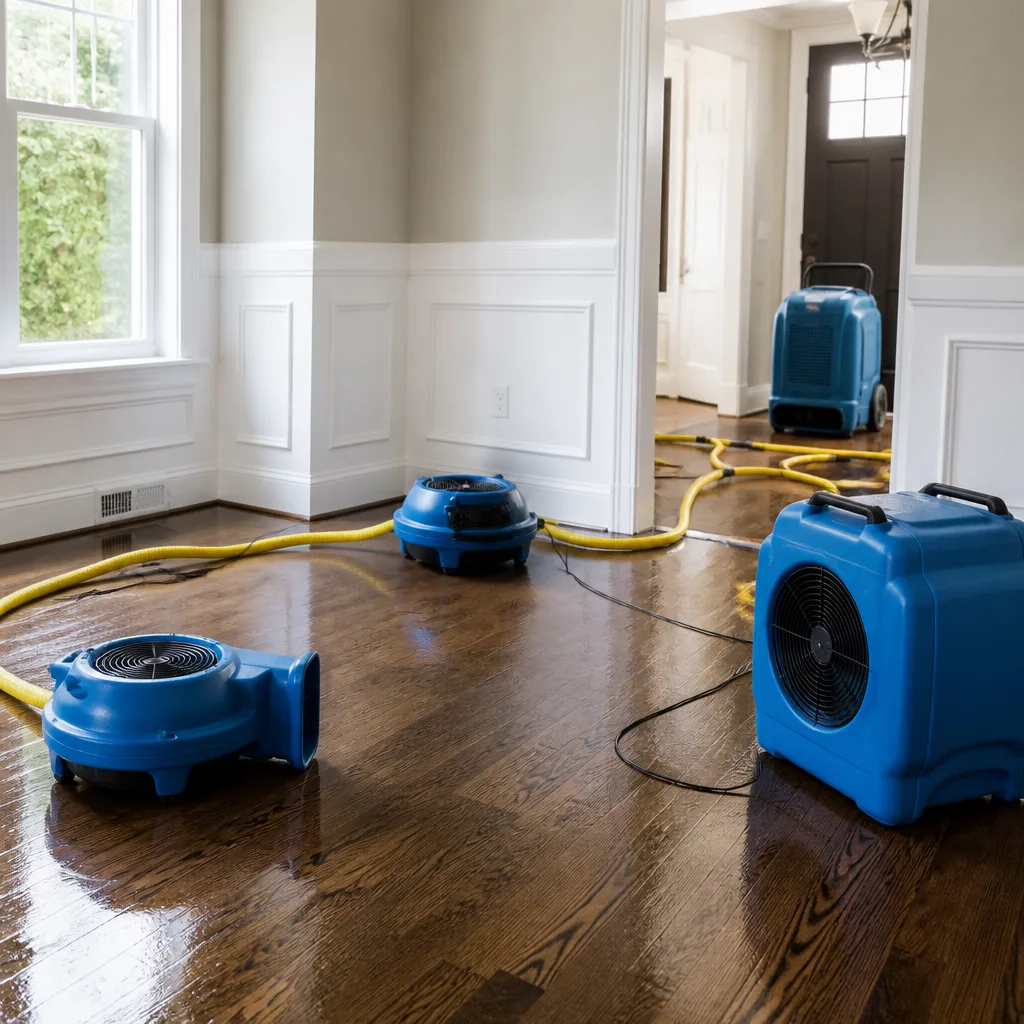
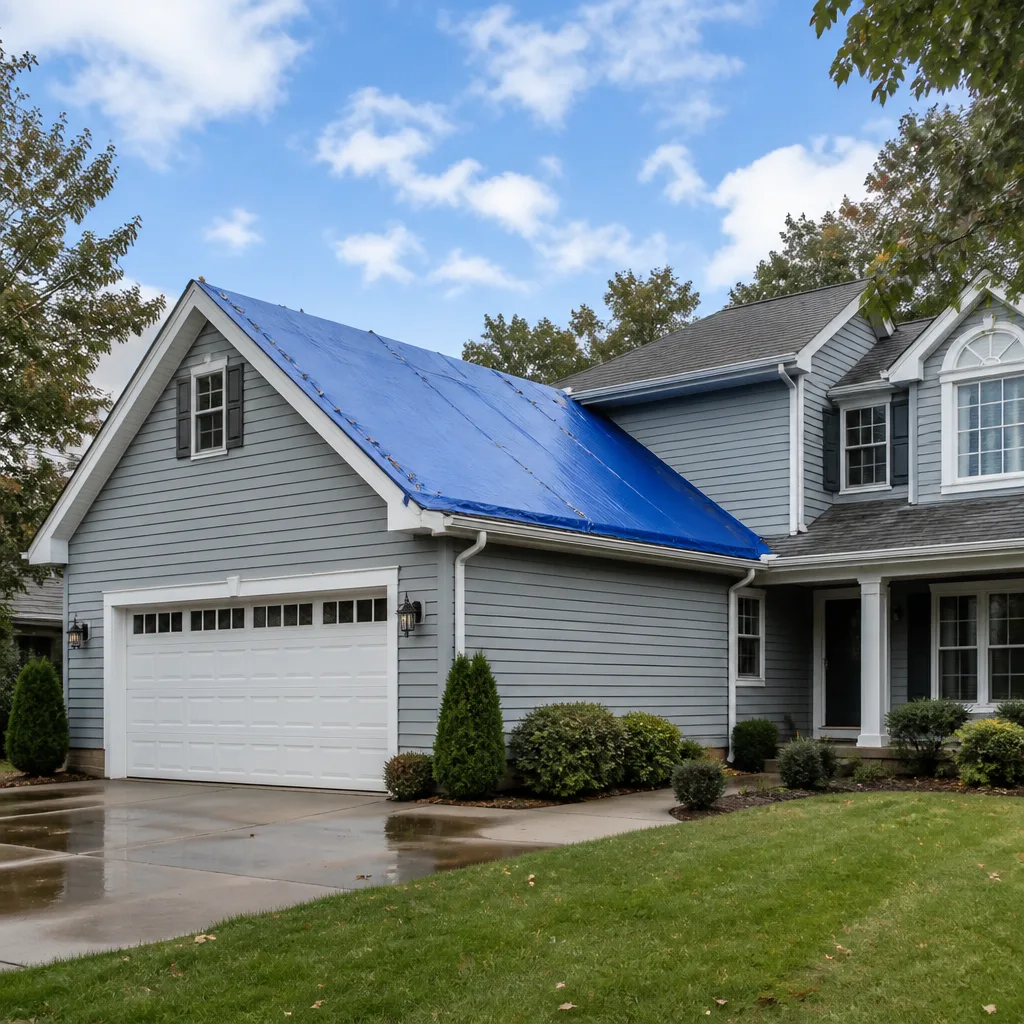
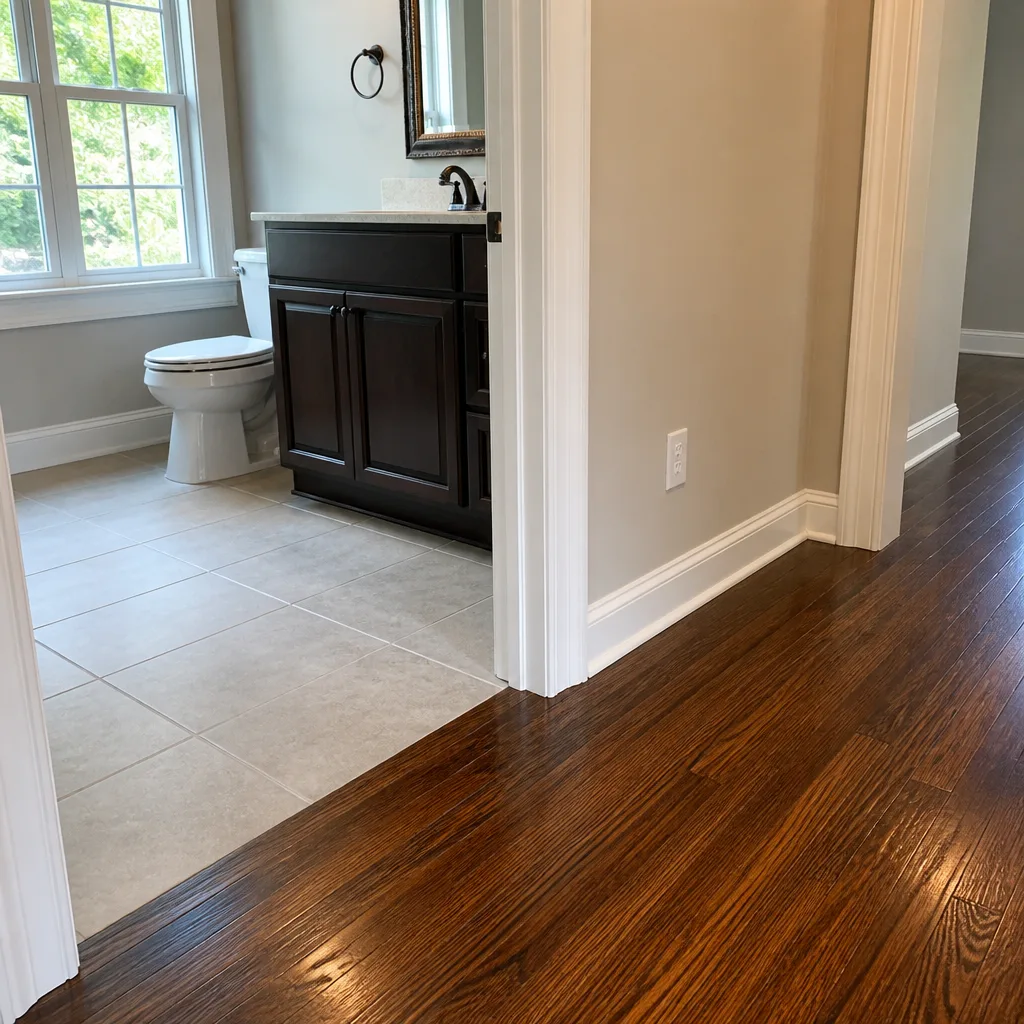
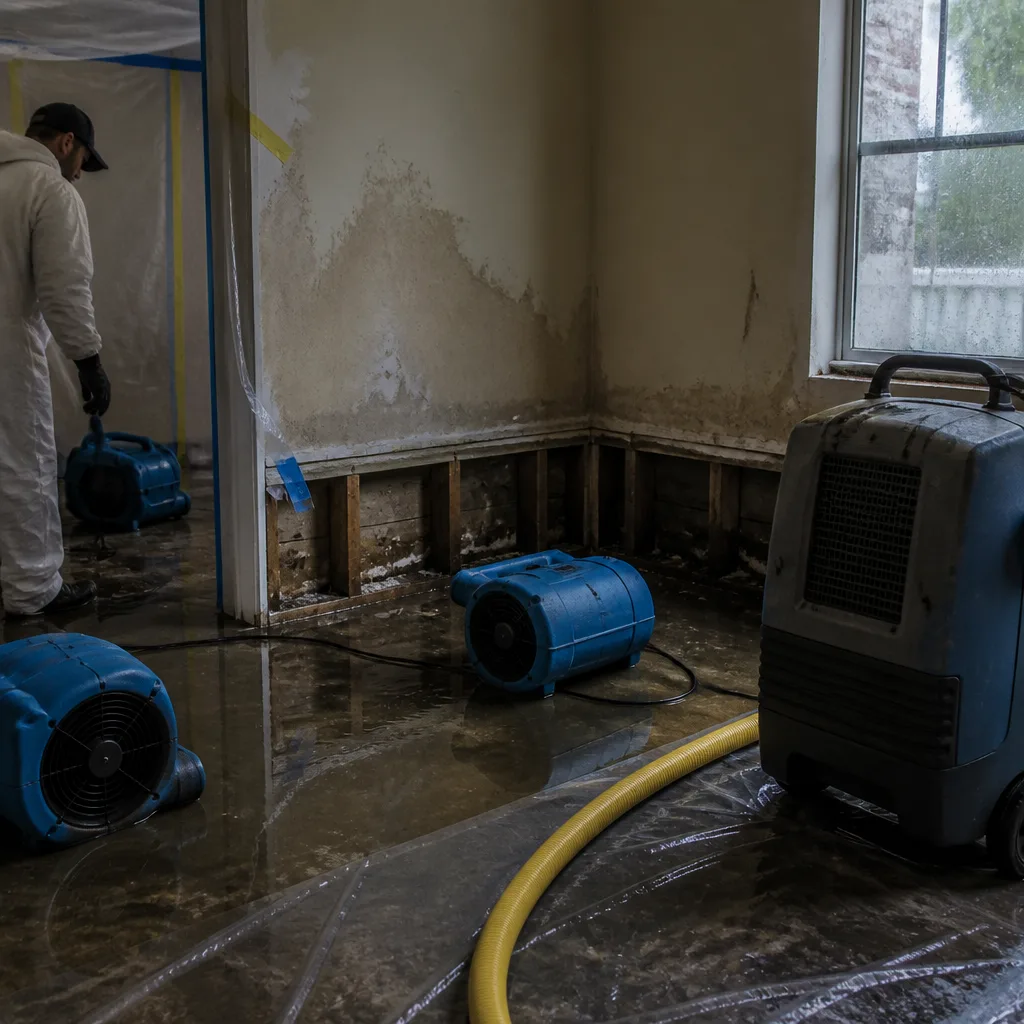 Before
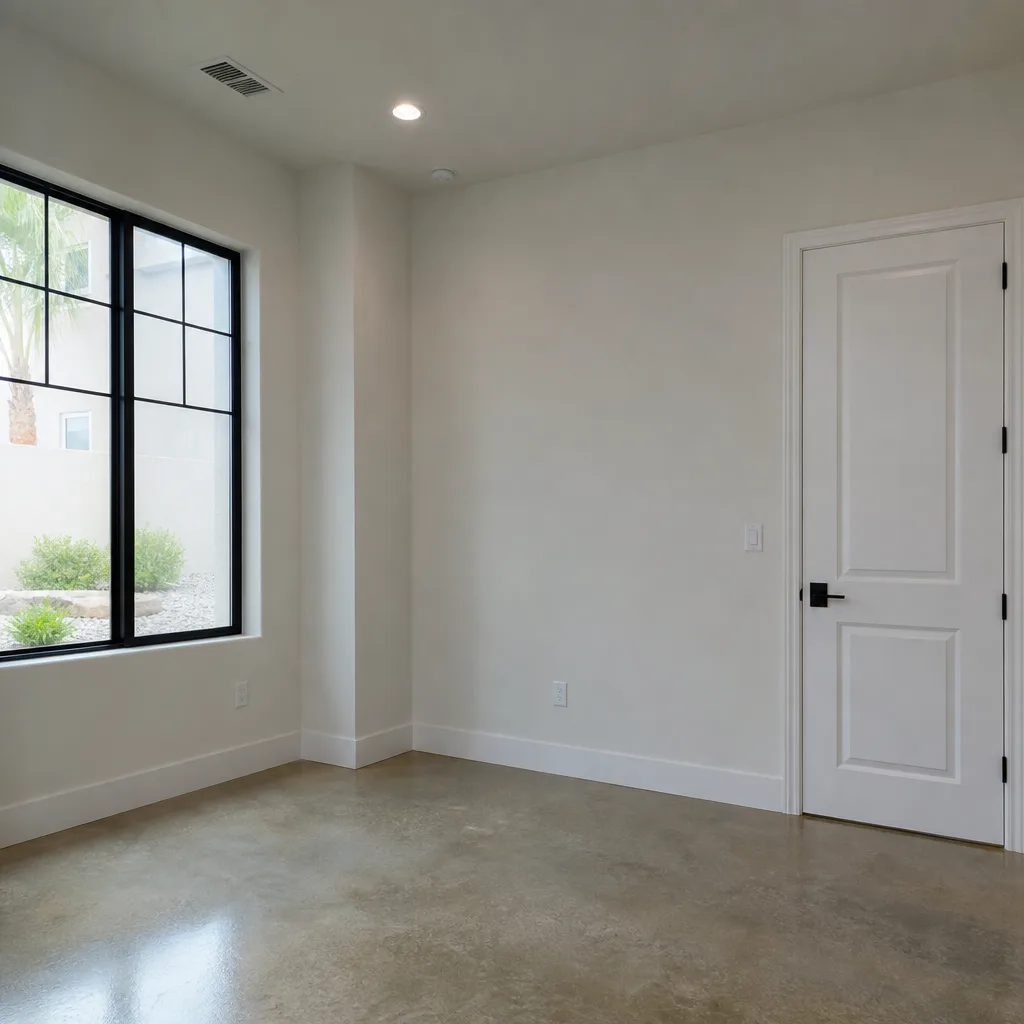 After
After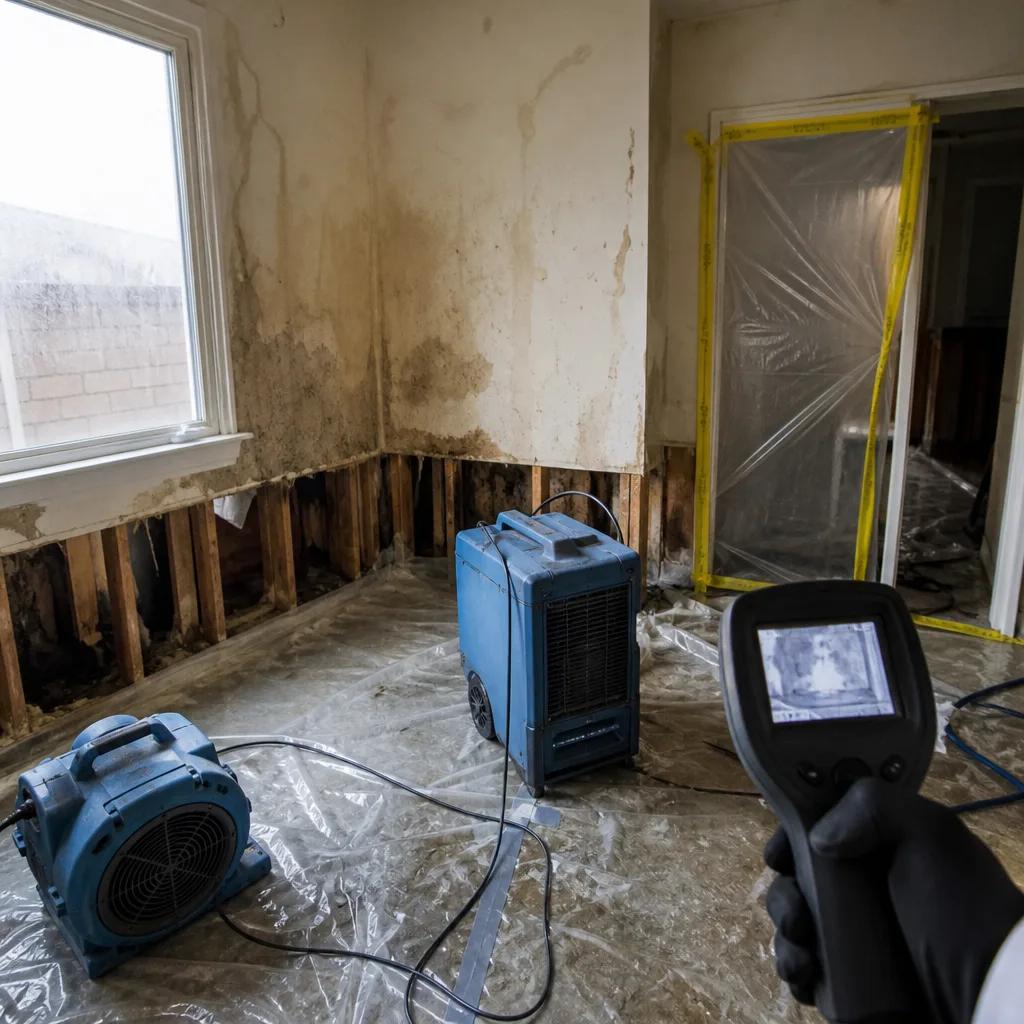 Before
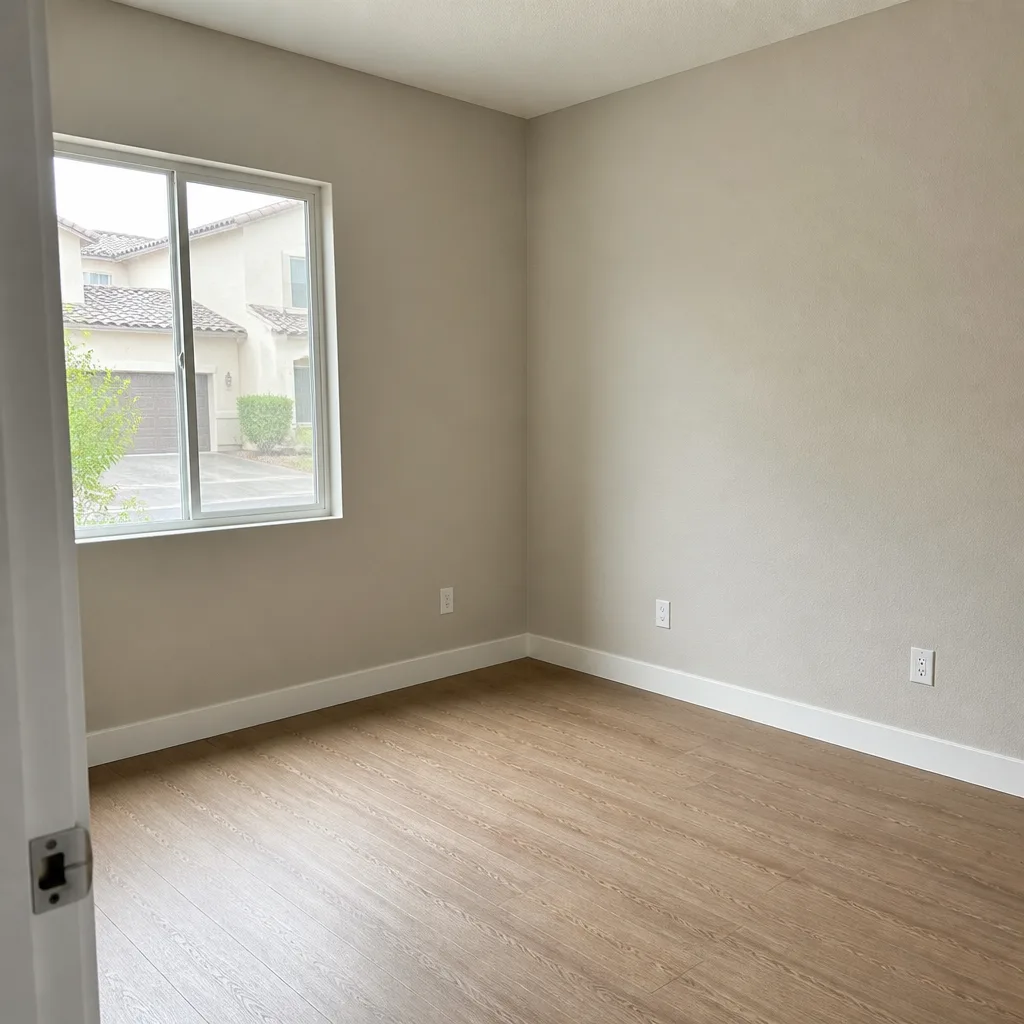 After
After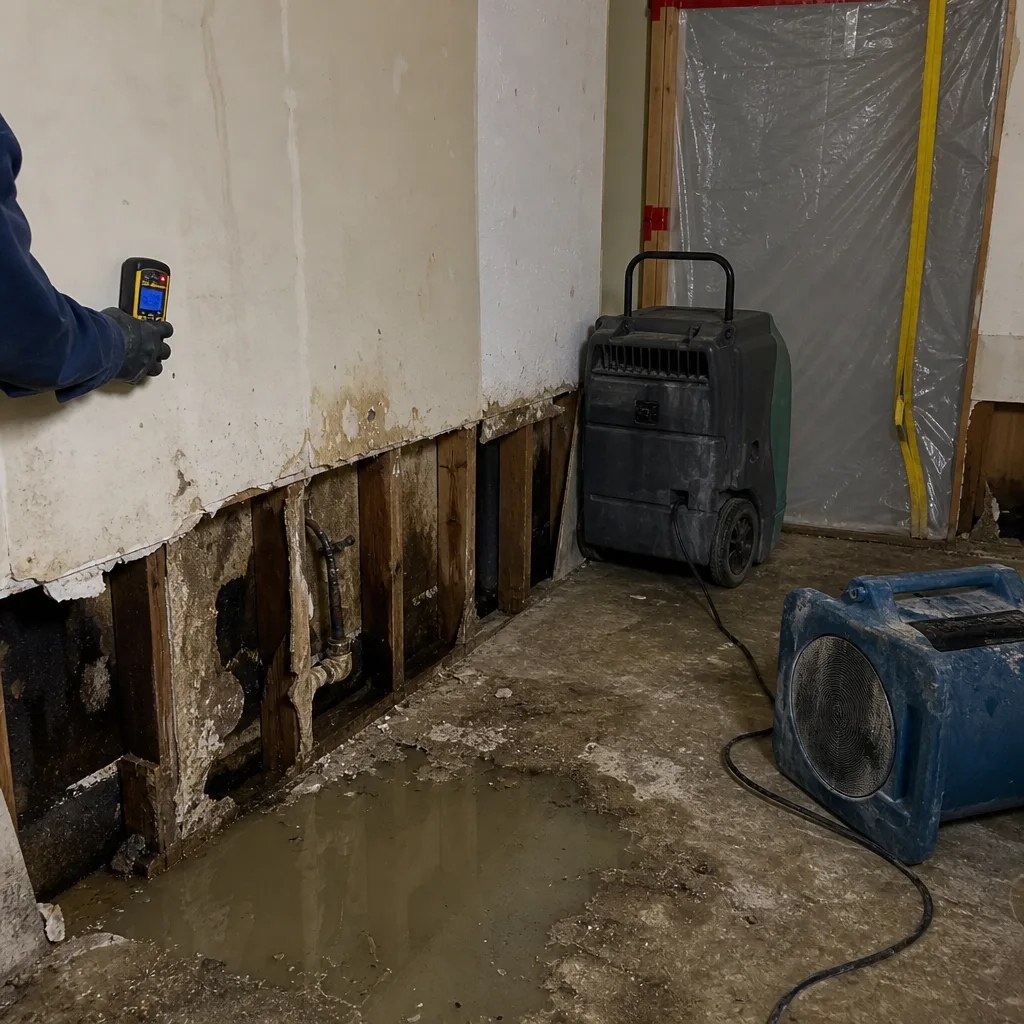 Before
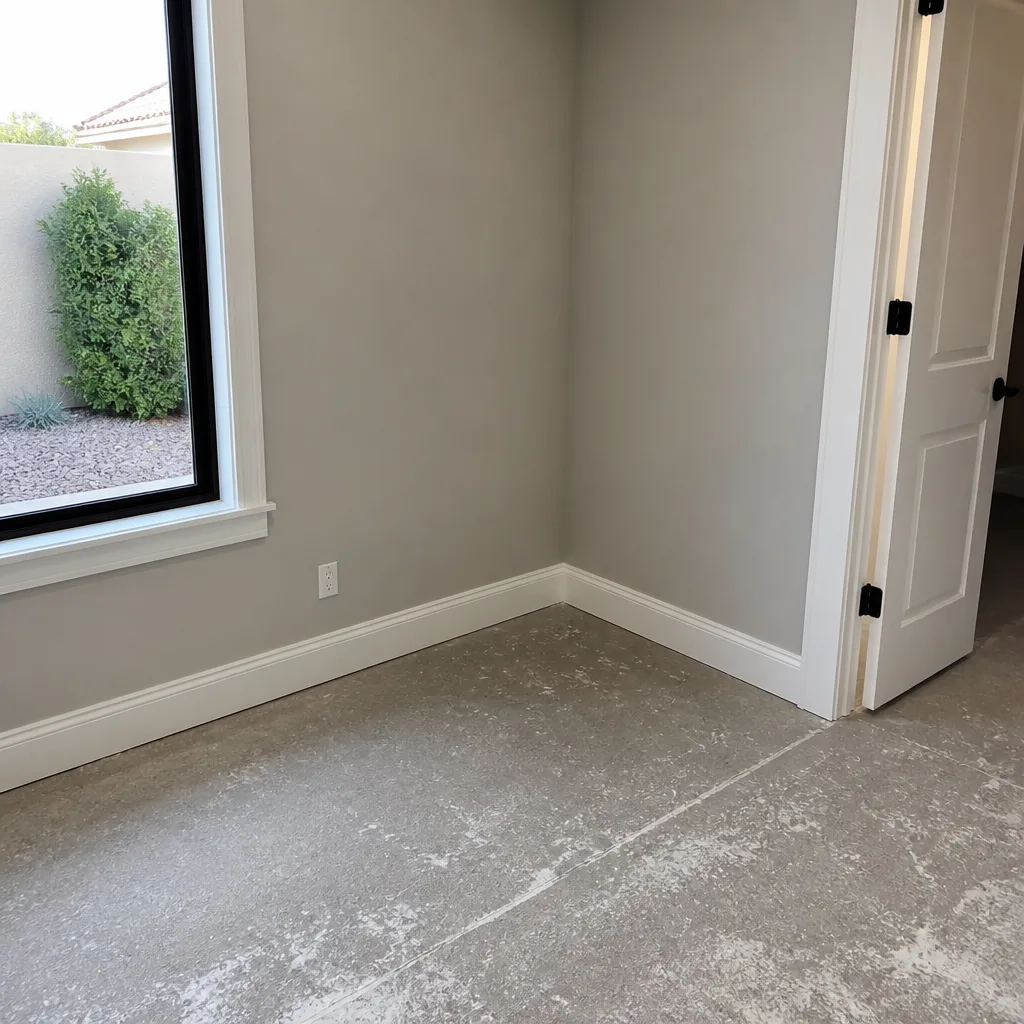 After
AfterDamage Restoration Warning Signs: A Summerlin Homeowner’s Reference Guide
The average Summerlin home takes 72 hours to show visible water damage after a leak begins. By then, moisture has already crossed into wall cavities, insulation has compressed to 40% of its R-value, and mold colonization has started in the paper facing of drywall. Most homeowners in Summerlin’s master-planned communities don’t miss the obvious signs - they miss the early, measurable ones that appear first in this region’s specific building materials and desert climate. This guide shows you what to measure, where to look, and how to decide between monitoring and calling for help - or see our DIY vs Professional Damage Restoration: The Summerlin Homeowner’s Decision Guide - before a $4,000 repair becomes a $40,000 remediation.
Quick Answer
Water damage warning signs in a Summerlin home progress through four measurable stages: efflorescence on stucco and mineral deposits at slab edges (stage 1, monitor weekly), flooring cupping exceeding 2mm or gapping wider than a nickel (stage 2, call within 48 hours), attic humidity above 60% RH or truss fastener corrosion (stage 3, call within 24 hours), and visible staining, musty odor, or HVAC supply duct sweating (stage 4, emergency response). The desert climate creates unique false signals - normal seasonal gapping in engineered hardwood and condensation from rapid temperature swings - that make precise measurement essential.
Table of Contents
- Efflorescence on Summerlin Stucco: Reading the White Deposits
- Flooring Cupping, Gapping, and Warping: Measurement Thresholds by Material
- Attic Inspection Indicators: Truss Corrosion, Insulation Compression, and Humidity Readings
- HVAC Warning Signs Frequently Misread as Appliance Failure
- The Summerlin Severity Scale: When to Monitor, Call, or Request Emergency Response
- Mold-Specific Warning Signs in Desert Construction
- Fire and Smoke Damage: Early Indicators After Wildfire Season
- Common Mistakes to Avoid
- When to Call a Professional
- Frequently Asked Questions
BeforeAfterEfflorescence on Summerlin Stucco: Reading the White Deposits
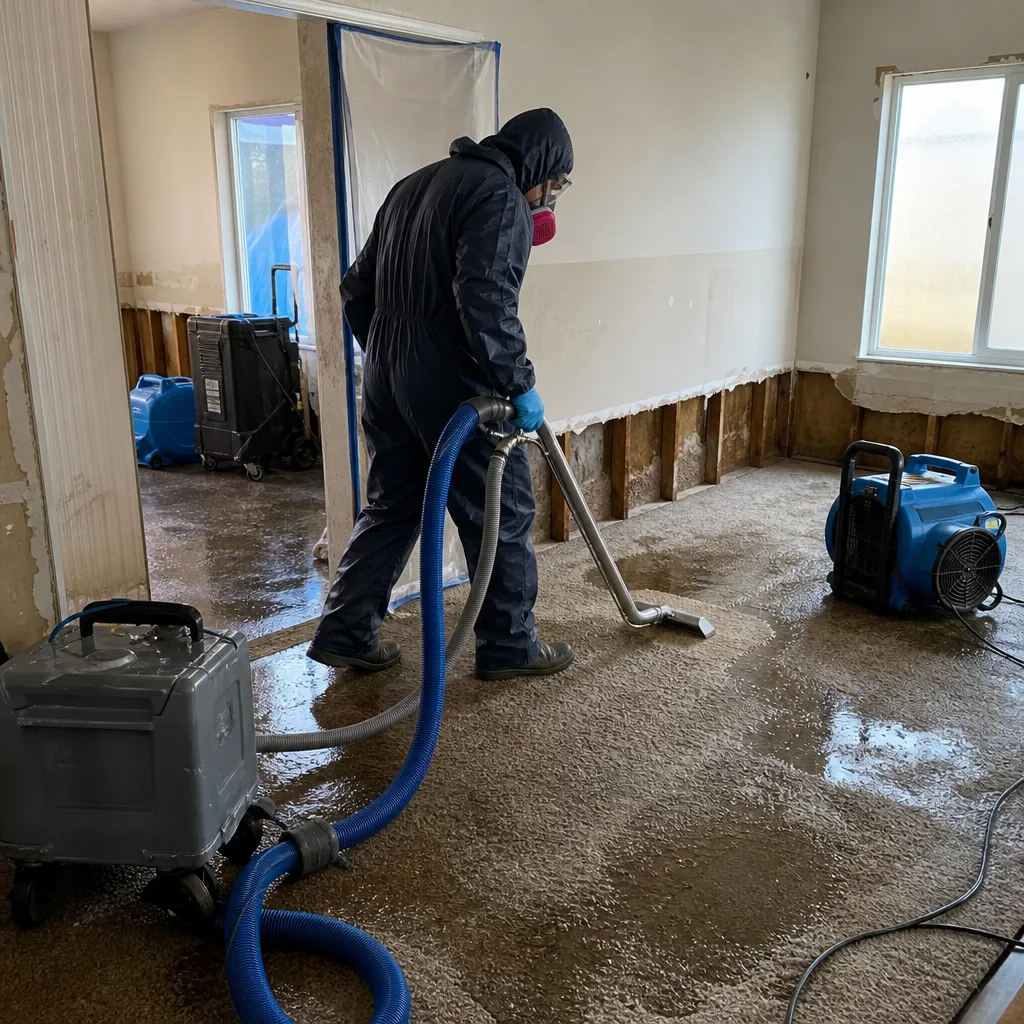
Summerlin’s predominant exterior finish - synthetic stucco (EIFS) and traditional cementitious stucco over CMU block - produces a diagnostic signal that most homeowners scrub away without measuring. Efflorescence, the white crystalline deposit of soluble salts, indicates water movement through the wall assembly. The critical distinction in Summerlin’s climate is location: efflorescence at the base of walls, within 6 inches of grade, often signals irrigation overspray or negative drainage against the foundation. Efflorescence at window heads, door frames, or mid-wall locations indicates bulk water intrusion from failed flashing or sealant joints - a more urgent condition.
We’ve documented thousands of Summerlin homes since 2011, and the pattern is consistent. The Summerlin South and The Trails subdivisions, built during the 1990s stucco boom, show efflorescence at parapet wall caps and second-story banding where two-piece foam trim details created thermal bridges. Newer construction in The Paseos and The Cliffs uses single-piece foam shapes that reduce this failure mode, but we still see efflorescence at the interface between stucco and manufactured stone veneer - a detail that traps moisture behind the stone and wicks it outward through the stucco bed coat.
Here’s how to read what you’re seeing:
- Powdery, brushable residue - fresh efflorescence, active water movement within the last 30 days. Measure the affected area in square feet and photograph it weekly.
- Crystalline, hard deposits - chronic condition, likely more than one wetting cycle. Check for accompanying spalling (surface flaking) in the stucco finish coat.
- Discoloration without crystalline structure - may be mildew or dirt accumulation, not true efflorescence. Dampen a small area; true efflorescence will partially dissolve and re-crystallize as it dries.
The moisture source matters for response timing. Irrigation-related efflorescence typically shows seasonal patterns - worse in July and August when watering frequency peaks, reduced in winter. Plumbing leak efflorescence progresses steadily regardless of season. In Summerlin’s hard water environment, the mineral load in municipal water makes efflorescence particularly dense and visible, which is diagnostically useful: the deposits are thicker where the water volume is greater.
Response threshold: efflorescence covering more than 2 square feet at any location above grade, or any efflorescence accompanied by interior drywall staining, warrants professional moisture mapping. For help choosing the right company, read our How to Hire a Damage Restoration Contractor in Summerlin: A Step-by-Step Guide. We use non-invasive impedance meters and thermal imaging to trace the water path without destructive testing, then deliver a written scope with line-item pricing before any work begins - Haven Standard, Clause 1.
Flooring Cupping, Gapping, and Warping: Measurement Thresholds by Material
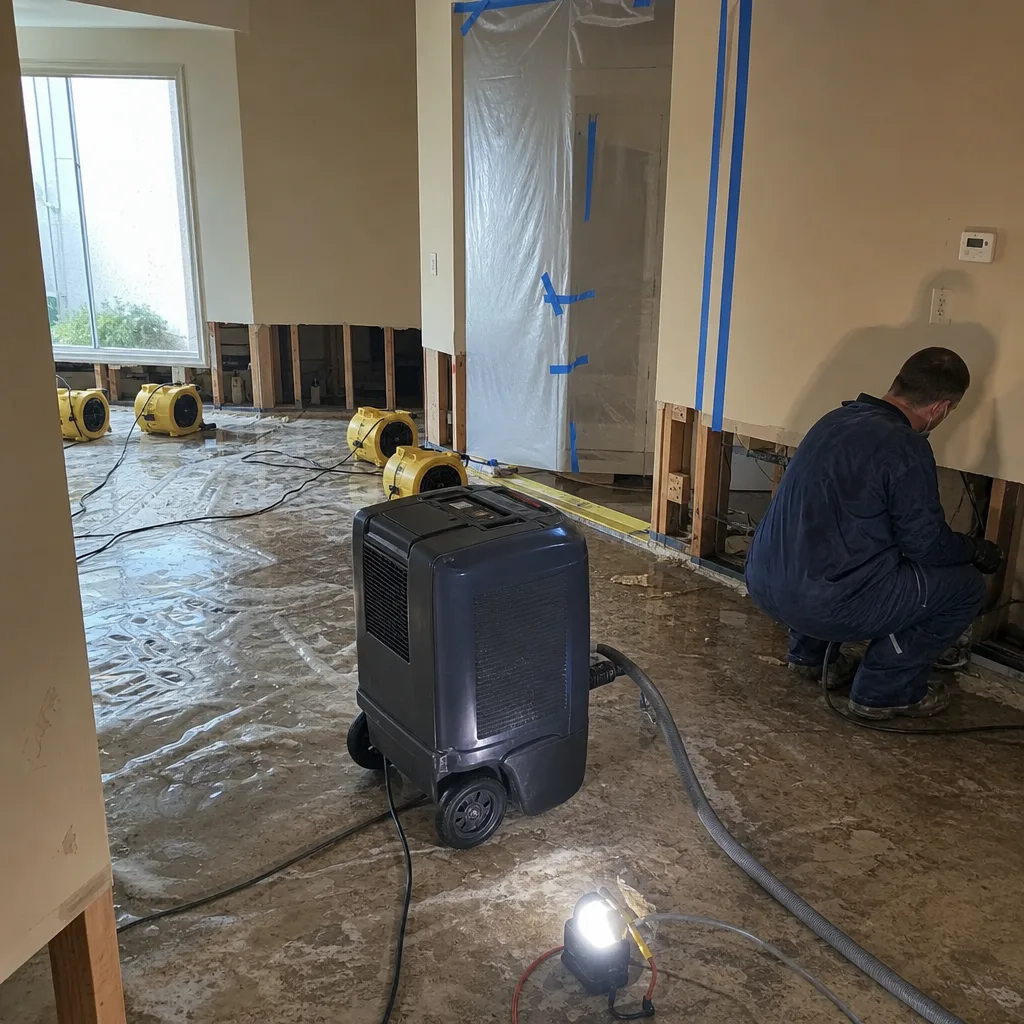
Summerlin’s desert climate creates flooring movement that homeowners routinely misread. Relative humidity in Summerlin swings from 15% in June to 50% in January, and engineered hardwood, solid hardwood, and luxury vinyl plank (LVP) respond differently. The key is knowing the millimeter threshold that separates normal seasonal movement from active moisture intrusion.
Engineered Hardwood: Normal seasonal gapping in Summerlin runs 0.5mm to 1.5mm between boards in winter heating season. Cupping (edges raised, center depressed) exceeding 2mm across a 5-inch plank indicates moisture from below - typically slab vapor emission or a plumbing leak in the radiant tubing common in Summerlin’s higher-end builds. We’ve measured cupping in The Ridges and Summerlin Centre where slab moisture vapor emission rates (MVER) exceeded 8 pounds per 1,000 square feet per 24 hours - double the flooring manufacturer’s warranty threshold. The homeowner had lived with the “slightly wavy” floor for 14 months; the subfloor mold remediation required removal of 1,200 square feet of material.
Solid Hardwood: More sensitive to ambient humidity swings. Gapping wider than 3mm (the width of a nickel stood on edge) in boards narrower than 3 inches suggests low humidity, not moisture damage. But cupping in solid hardwood - any measurable cupping in Summerlin’s dry climate - is abnormal. Solid hardwood should not cup here unless water is entering from below or significant liquid exposure has occurred.
LVP and Laminate: These materials don’t cup; they tent at joints or delaminate. Tenting (peaking at plank ends) more than 4mm indicates hydrostatic pressure or significant subfloor moisture. Delamination of the wear layer, visible as bubbling or separation, often follows minor flooding that the homeowner dried superficially without addressing the subfloor.
Tile and Stone: The diagnostic signal is grout line discoloration or efflorescence at grout joints. In Summerlin, where calcium-rich water is universal, white deposits at grout indicate water movement through the thinset bed. More critically, hollow-sounding tile (tap with a coin; solid tile rings, hollow tile thuds) indicates debonding from moisture-related thinset failure. We’ve found this in Summerlin Hills and The Gardens where slab curl from moisture differential lifted tile assemblies.
Measurement protocol: Use a digital caliper or simple feeler gauge. Document cupping depth at three points per affected plank. Photograph gapping with a nickel or quarter for scale. If cupping exceeds 2mm on engineered products or any cupping appears on solid hardwood in Summerlin’s climate, schedule moisture testing of the concrete slab or subfloor. Our documentation includes psychrometric data - temperature, relative humidity, and vapor pressure differential - that distinguishes ambient seasonal effects from active moisture sources.
Attic Inspection Indicators: Truss Corrosion, Insulation Compression, and Humidity Readings
Summerlin’s attic spaces tell a specific story because of how they’re built. Most homes here use raised-heel trusses with blown-in fiberglass or cellulose insulation, and the attic is ventilated through soffit and ridge vents designed for our climate’s extreme temperature differentials. The warning signs that matter are the ones that develop slowly, hidden above the ceiling plane.
Truss fastener corrosion: The galvanized steel plates at truss joints (gusset plates) should show no rust in a properly ventilated attic. Surface rust appearing at fastener points - the teeth pressed into the lumber - indicates sustained humidity above 70% RH. In Summerlin’s dry climate, this is never normal. We’ve documented truss plate corrosion in The Arbors and Pueblo Ridge where bathroom exhaust fans were vented into attics rather than through the roof, and in The Vistas where a single missing ridge vent shingle created a moisture trap in the attic peak. The corrosion is progressive: surface staining at year two, measurable metal loss at year five, structural engineering review required by year eight.
Insulation compression: Blown fiberglass should maintain its installed depth, typically R-38 to R-60 in Summerlin (14 to 20 inches). Compression to less than 75% of original depth indicates water saturation and drying cycles. The insulation doesn’t spring back. More subtly, discoloration of fiberglass batts - yellowing or graying - indicates airborne moisture carrying dust and pollutants that deposit in the fibers. This is common near attic air handlers where supply plenums leak conditioned air into the attic space.
Humidity readings: The definitive measurement. In Summerlin, attic relative humidity should track outdoor conditions, typically 10% to 30% in summer afternoons and 30% to 50% in winter. Sustained readings above 60% RH indicate a moisture source. We use data-logging hygrometers left in place for 72 hours to capture the pattern; a single snapshot reading can mislead during a monsoon moisture surge or after a cooling system cycle.
Specific locations to check:
- At the attic air handler platform - check for water stains on the platform deck, corrosion on the condensate drain pan, and moisture at the secondary drain line termination
- At penetrations through the ceiling plane - recessed can lights, speaker holes, attic access hatches - where warm moist interior air exfiltrates and condenses on cold surfaces
- At the north-facing roof slope, where morning dew persists longest and where slow leaks from wind-driven rain first appear
- At ridge vent and gable vent locations, where blocked airflow creates stagnant moisture zones
The decision rule: any attic humidity reading above 60% RH sustained over 48 hours, any visible truss plate corrosion, or insulation compressed below 75% of labeled depth warrants professional evaluation. We document attic conditions with photo records on every visit, measure moisture content of roof deck sheathing with pin-type meters, and deliver a written scope with line-item pricing - Haven Standard, Clause 1.
HVAC Warning Signs Frequently Misread as Appliance Failure
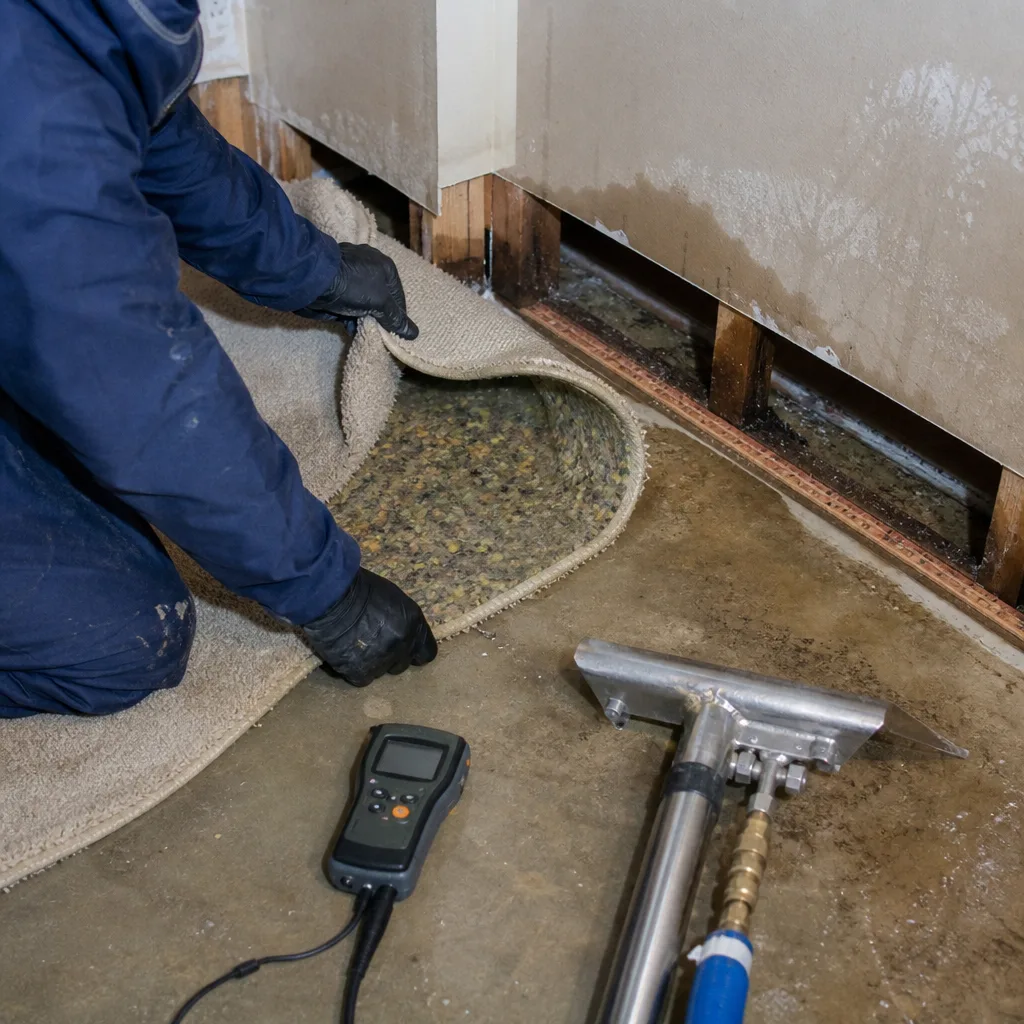
Summerlin’s cooling-dominated climate makes the HVAC system the primary moisture management device in most homes. When it malfunctions or is misdiagnosed, the resulting moisture conditions are often attributed to “appliance failure” when they’re actually early water damage signals. We’ve reviewed hundreds of claims where a homeowner replaced a perfectly functional air handler while the real problem - a disconnected duct, a blocked condensate line, or negative pressure drawing attic air - continued degrading the building.
Corrosion on the air handler cabinet: Rust on the exterior of the indoor coil cabinet, particularly at the bottom where the condensate pan sits, indicates chronic overflow or pan leakage. In Summerlin, where cooling runs 8 months annually, a condensate pan with even a hairline crack can deposit 2 to 5 gallons of water weekly into the return plenum or platform. The homeowner smells “musty AC” and calls an HVAC contractor who sells them a new coil; the platform rot and subfloor staining aren’t discovered until the cabinet is removed. Check the condensate drain line termination outside - it should flow visibly during cooling cycles. If it doesn’t, the line is blocked or the pan is leaking elsewhere.
Secondary drain pan water: The emergency pan beneath the air handler (required by IRC and Summerlin building code) should be dry. Any water in this pan triggers the float switch and shuts the system down - a designed failsafe. If your system has shut off repeatedly and the pan contains water, the primary drain is compromised. More critically, if the float switch was bypassed or the pan was installed without one (common in pre-2005 construction), water overflows the pan and saturates the ceiling below. We’ve documented this in The Trails and The Crossing where original construction predated strict float switch enforcement.
Supply duct sweating: Ductwork sweating in Summerlin is abnormal and indicates one of three conditions: duct insulation degradation (R-value below R-6 in unconditioned spaces), supply air temperature below 55°F (overcooling or refrigerant overcharge), or duct leakage creating negative pressure that draws humid attic air across cold surfaces. The diagnostic location matters: sweating at duct joints indicates leakage; sweating along straight duct runs indicates inadequate insulation; sweating only in certain rooms indicates airflow imbalance or damper issues. Rooms that “never cool properly” and show supply vent condensation are often under negative pressure, drawing moist outdoor air through wall penetrations.
Return air grille condensation: Less common but more serious. Condensation on return grilles indicates the return duct is running through an unconditioned, humid space - typically a garage, a vented crawl, or an attic with compromised insulation. In Summerlin’s The Pueblo and Red Rock Country Club areas, we’ve found return ducts routed through garage attic spaces where summer temperatures exceed 140°F and the duct insulation has degraded to ineffective R-1 or R-2.
The measurement that clarifies: a simple infrared thermometer. Supply air temperature at the vent should be 15-20°F below return air temperature. Surface temperature of the duct exterior should be within 5°F of ambient attic temperature. If the duct surface is below the dew point of the surrounding air, sweating will occur. Our diagnostic protocol includes pressure mapping - measuring static pressure at the air handler and at distant supplies - to identify duct leakage quantitatively before recommending repair scope.
The Summerlin Severity Scale: When to Monitor, Call, or Request Emergency Response
Warning signs without decision rules create anxiety without action. This scale assigns response timelines based on what we’ve measured in Summerlin homes since 2011. The scale assumes you’ve done basic observation; professional verification is always available at no charge for the initial assessment. For year-round prevention tips, see our Seasonal Damage Restoration Care for Summerlin: Year-Round Homeowner’s Guide.
Water Damage Severity Scale
| Stage | Indicator | Measurement Threshold | Response Timeline | Typical Summerlin Context |
|---|---|---|---|---|
| 1 | Efflorescence on stucco | Less than 2 sq ft, below grade only | Monitor weekly, photograph monthly | Irrigation overspray, common in The Gardens and The Trails |
| 1 | Seasonal floor gapping | Less than 3mm in engineered hardwood | Monitor; humidify if below 30% RH | Normal winter heating season response |
| 2 | Efflorescence above grade or at windows | Any amount above grade; any window/door location | Call within 48 hours | Failed flashing, sealant joint breach |
| 2 | Floor cupping in engineered products | 2mm or greater across 5-inch plank | Call within 48 hours | Slab vapor emission, plumbing leak |
| 2 | Attic humidity elevation | 60-70% RH sustained 24-48 hours | Call within 48 hours | Exhaust fan mis-routing, minor roof leak |
| 3 | Any cupping in solid hardwood | Any measurable amount | Call within 24 hours | Significant water intrusion in dry climate |
| 3 | Truss plate corrosion visible | Any surface rust at fastener points | Call within 24 hours | Chronic attic moisture, ventilation failure |
| 3 | HVAC secondary pan water | Any water in emergency pan | Call within 24 hours | Primary drain failure, imminent ceiling damage |
| 4 | Visible interior staining | Any ceiling/wall discoloration | Emergency response | Active leak, saturated drywall |
| 4 | Musty odor with no visible source | Any persistent odor | Emergency response | Hidden mold, cavity moisture |
| 4 | Supply duct sweating with ceiling damage | Visible water at supply vents or surrounding drywall | Emergency response | Duct leakage, insulation failure, active damage |
Mold Severity Scale
| Stage | Indicator | Measurement Threshold | Response Timeline |
|---|---|---|---|
| 1 | Isolated surface mildew | Less than 10 sq ft, non-porous surface | Self-clean with detergent; monitor |
| 2 | Recurrent mildew after cleaning | Same location, returns within 30 days | Call within 48 hours - moisture source unresolved |
| 2 | Visible mold on porous material | Any amount on drywall, carpet, ceiling tile | Call within 48 hours - requires professional remediation |
| 3 | Mold with accompanying moisture damage | Staining, swelling, or odor with visible growth | Call within 24 hours - category 2 or 3 water damage likely |
| 4 | HVAC-borne mold | Visible growth in ducts, coils, or plenum | Emergency response - whole-system exposure risk |
The severity scale is a decision tool, not a diagnostic endpoint. Stage 2 and above conditions in Summerlin homes typically involve moisture sources that require professional moisture mapping to locate and quantify. Our assessments include written findings with photo documentation, moisture content readings by material type, and a line-item scope with pricing before any work begins.
Mold-Specific Warning Signs in Desert Construction
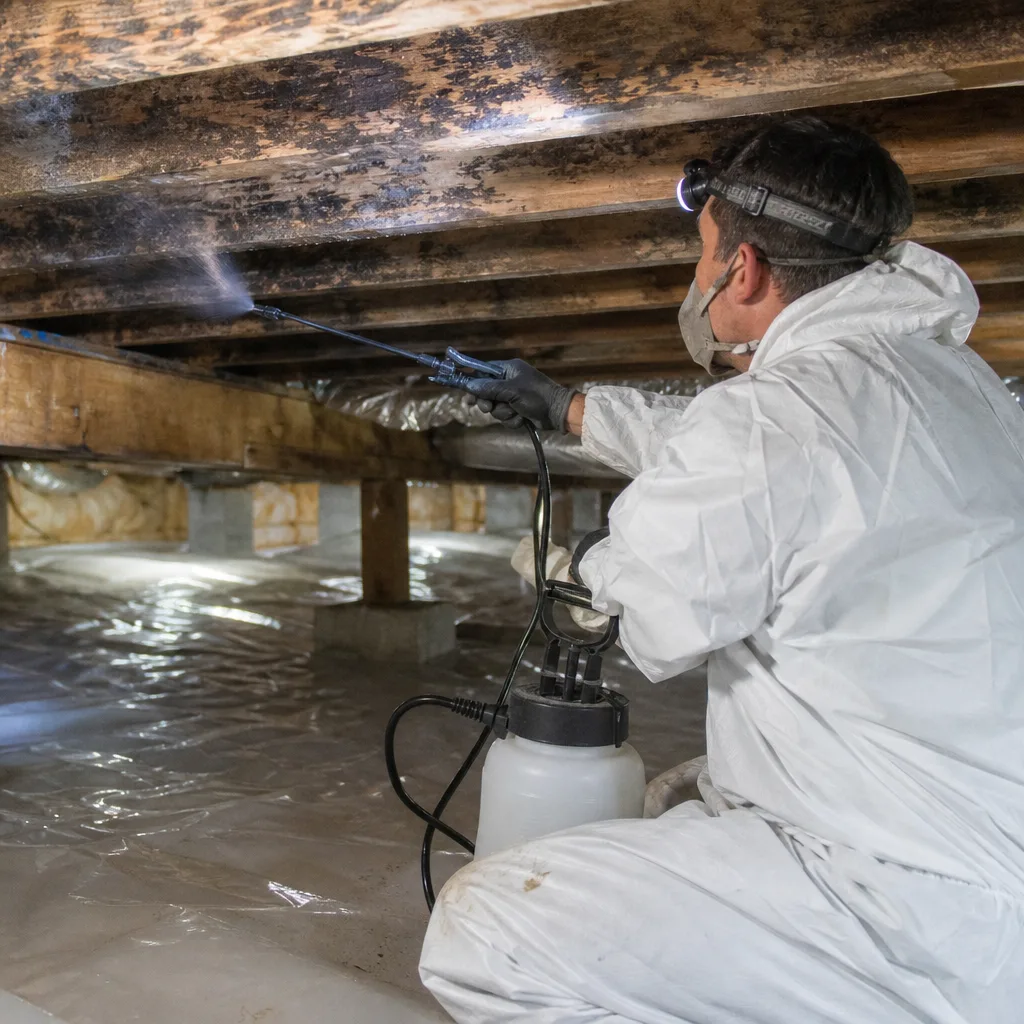
Summerlin’s climate creates a specific mold risk profile that contradicts common assumptions. The desert’s low ambient humidity does not prevent mold; it concentrates it. When moisture events occur - plumbing leaks, irrigation intrusion, HVAC condensate failures - the dry surrounding materials wick water aggressively, and the rapid evaporation creates localized humidity pockets ideal for Aspergillus and Penicillium species that colonize in 48 to 72 hours.
The warning signs specific to our region:
- “Ghosting” on ceiling drywall - faint, irregular dark lines that follow ceiling joists or insulation gaps. This is not mold; it’s soot and dust deposition from thermal bridging. But it indicates temperature differentials that create condensation surfaces, and the same conditions that produce ghosting will support mold when moisture is introduced. We’ve found ghosting patterns in The Arbors that preceded actual mold growth by 18 months after a minor roof leak.
- Resilient floor tile discoloration - vinyl composition tile (VCT) in Summerlin’s older homes, particularly utility rooms and secondary baths, develops a pink or orange hue at edges. This is bacterial growth (Serratia marcescens) feeding on adhesive plasticizers in wet conditions. It precedes mold and indicates chronic moisture at the slab interface.
- Carpet tack strip staining - the wooden strips at carpet edges darken when moisture wicks through slab or subfloor. In Summerlin, where slab-on-grade construction is universal, tack strip staining within 6 inches of walls indicates either exterior irrigation intrusion or plumbing in the slab. The staining is often visible only when carpet is pulled; we document this during moisture mapping with photo records included in every assessment.
- Acoustic ceiling tile sagging - common in Summerlin’s 1990s-era homes with dropped ceilings in basements (where present) and utility areas. Tile sagging indicates water absorption; the mineral fiber material supports mold growth at moisture contents above 15%. Unlike drywall, ceiling tile cannot be dried in place - replacement is required, and the grid system must be inspected for corrosion.
The critical measurement for mold risk is not visible growth but moisture content of susceptible materials. Drywall paper facing supports mold at 16% moisture content; wood framing at 20%; carpet and pad at saturation. We use pin-type and non-invasive moisture meters to map affected areas, then establish drying goals with psychrometric calculations - temperature, relative humidity, and vapor pressure differential - that determine equipment selection from our Dri-Eaz and Phoenix inventory. Daily drying logs document progress to the moisture goal, producing the documentation that insurance adjusters require for claim payment.
Our Mold Remediation in Summerlin page details the remediation protocol, containment requirements, and clearance testing standards we follow.
Fire and Smoke Damage: Early Indicators After Wildfire Season
Summerlin’s wildfire exposure - particularly from the Red Rock Canyon interface and the Mount Charleston watershed - creates a distinct smoke damage profile that homeowners often miss in the immediate aftermath. The 2013 Carpenter 1 fire and the 2020 Mahogany fire deposited smoke residues across western Summerlin that affected homes with no visible flame exposure. The warning signs appear in a predictable sequence.
Acute indicators (0-72 hours post-exposure): Soot fallout on horizontal surfaces, particularly outdoor furniture, pool decks, and window sills. The residue is oily and smears when wiped - this is wet smoke from incomplete combustion of vegetation, more damaging than the dry smoke from structural fires. Indoor indicators: activated smoke odor within 24 hours of HVAC operation, as the system draws in particulate-laden outdoor air. The odor is sharp and acrid, distinct from normal dust accumulation.
Subacute indicators (1-4 weeks): Corrosion at metal contacts - door hinges, cabinet hardware, electrical receptacle screws - from acidic smoke residue. In Summerlin’s heat, this accelerates; we’ve documented hinge corrosion within 10 days of heavy smoke exposure. Discoloration of painted exterior surfaces, particularly south and west exposures where heat bakes residue into the substrate. HVAC filter loading - filters that normally last 90 days require replacement at 2-3 weeks.
Chronic indicators (1-6 months): Persistent odor that “comes back” after cleaning, indicating sorption into porous materials - upholstery, carpet cushion, drywall, and insulation. The odor molecules bind to these materials and release with temperature and humidity changes. Electrical system degradation: smoke residue on contacts increases resistance, producing heat and potentially failure at outlets and switches. This is particularly relevant for Summerlin homes with aluminum wiring (1965-1973 construction in early phases).
The documentation challenge with wildfire smoke is proving the loss to insurance. We photograph pre-cleaning conditions, collect residue samples for analysis, and document HVAC contamination with borescope inspection of duct interiors. The written scope addresses structural cleaning, contents restoration, HVAC decontamination, and odor mitigation with specific line items - Haven Standard, Clause 1. Our Fire & Smoke Damage Restoration in Summerlin page details the full protocol.
A specific Summerlin consideration: homes in The Ridges, The Summit, and Red Rock Country Club with operable windows and natural ventilation systems require specialized evaluation. These systems, designed for energy efficiency, can trap smoke-laden air in wall cavities and attic spaces when not properly flushed after exposure.
Common Mistakes to Avoid
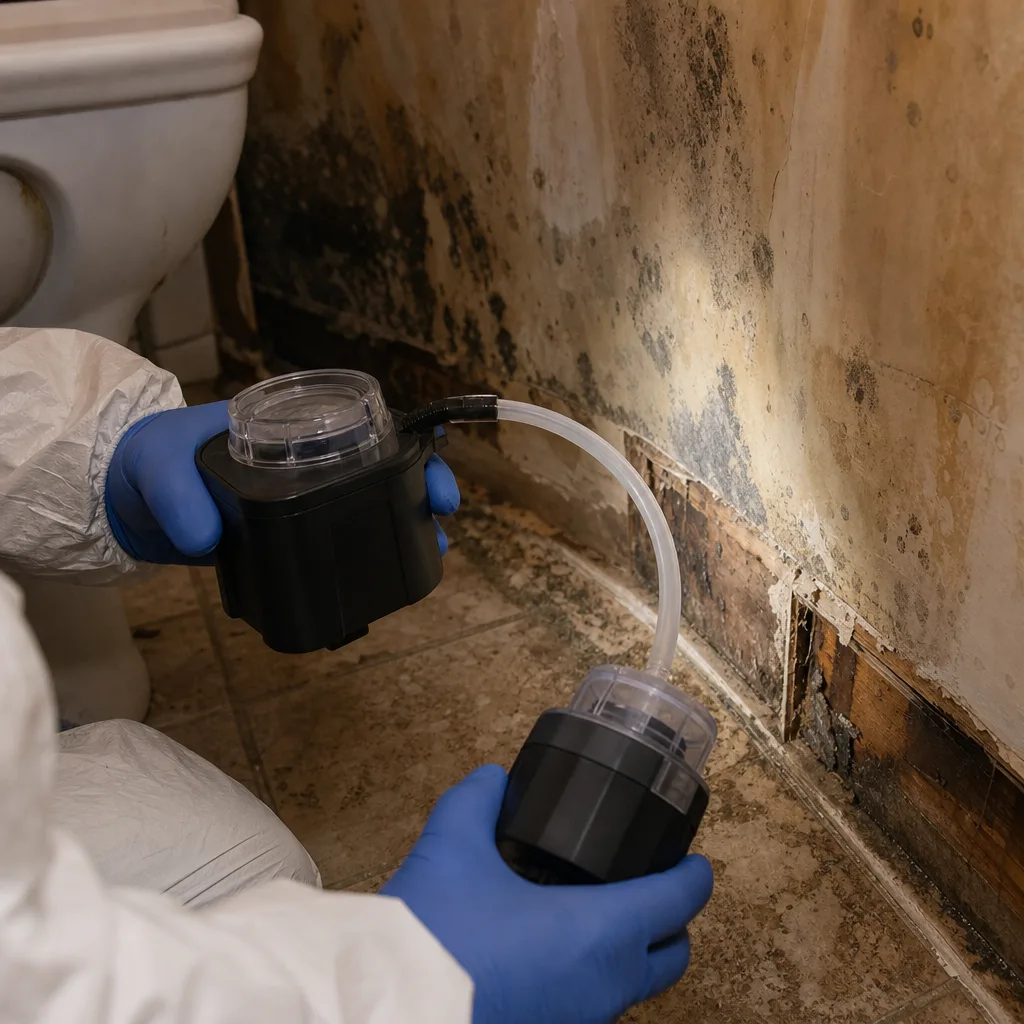
- Waiting for visible stains before acting. By the time drywall shows discoloration, moisture has saturated insulation, framing, and potentially the slab edge. In Summerlin’s stucco construction, the wall cavity can hold 15-20 gallons of water before interior signs appear. Measure early; don’t wait to see.
- Attributing floor movement to “desert dryness.” Yes, Summerlin is dry. But engineered hardwood is manufactured for climate stability, and cupping is never normal here. The “it’s just dry air” explanation delays slab moisture testing until mold is established in the subfloor.
- DIY mold cleaning with bleach on porous surfaces. Bleach evaporates faster than it penetrates, leaving moisture behind that feeds deeper growth. On drywall, carpet, or ceiling tile, surface cleaning without moisture source elimination worsens the problem. We document this regularly in homes where homeowners attempted remediation before calling.
- Replacing HVAC components without addressing duct leakage. A new coil or air handler won’t stop supply duct sweating if the root cause is negative pressure from return leakage. We’ve assessed homes where two coils were replaced in three years; the $400 duct sealing would have solved it permanently.
- Ignoring efflorescence as “just salt from the soil.” The salts are diagnostic of water movement, and the volume of water required to transport them is significant. Brushing it off without finding the source is like turning off a smoke detector instead of checking for fire.
- Assuming new construction is immune. Summerlin’s newest communities - The Cliffs, The Paseos, and The Mesa - have the highest rate of construction-defect moisture intrusion we’ve documented. Tight building envelopes with inadequate drying potential, combined with compressed construction schedules, create conditions that manifest within the first 2-4 years of occupancy.
- Declining professional assessment because “it dried on its own.” Materials that feel dry to touch can harbor moisture at depth. We use thermal imaging and impedance meters to verify; surface dryness without verification is a common precursor to hidden mold.
When to Call a Professional
Call for professional assessment when any indicator reaches Stage 2 or above on the severity scale, when you cannot identify the moisture source, or when a previous repair has failed to resolve the condition. In Summerlin’s specific construction environment, the cost of delayed response escalates quickly: slab moisture that could be resolved with vapor barrier installation at $3,000-$5,000 becomes a full remediation at $25,000-$40,000 when mold colonizes wall cavities and requires structural drying, containment, and reconstruction.
DryMark Restoration Summerlin offers free estimates throughout Summerlin - call (725) 216-2692. Every assessment includes a written scope with line-item pricing before any work begins, photo documentation of all findings, and moisture mapping with professional-grade equipment. Our 365-Day Done Right Promise under The Haven Standard applies to every job we perform. Explore more guides & resources on protecting your home.
Frequently Asked Questions
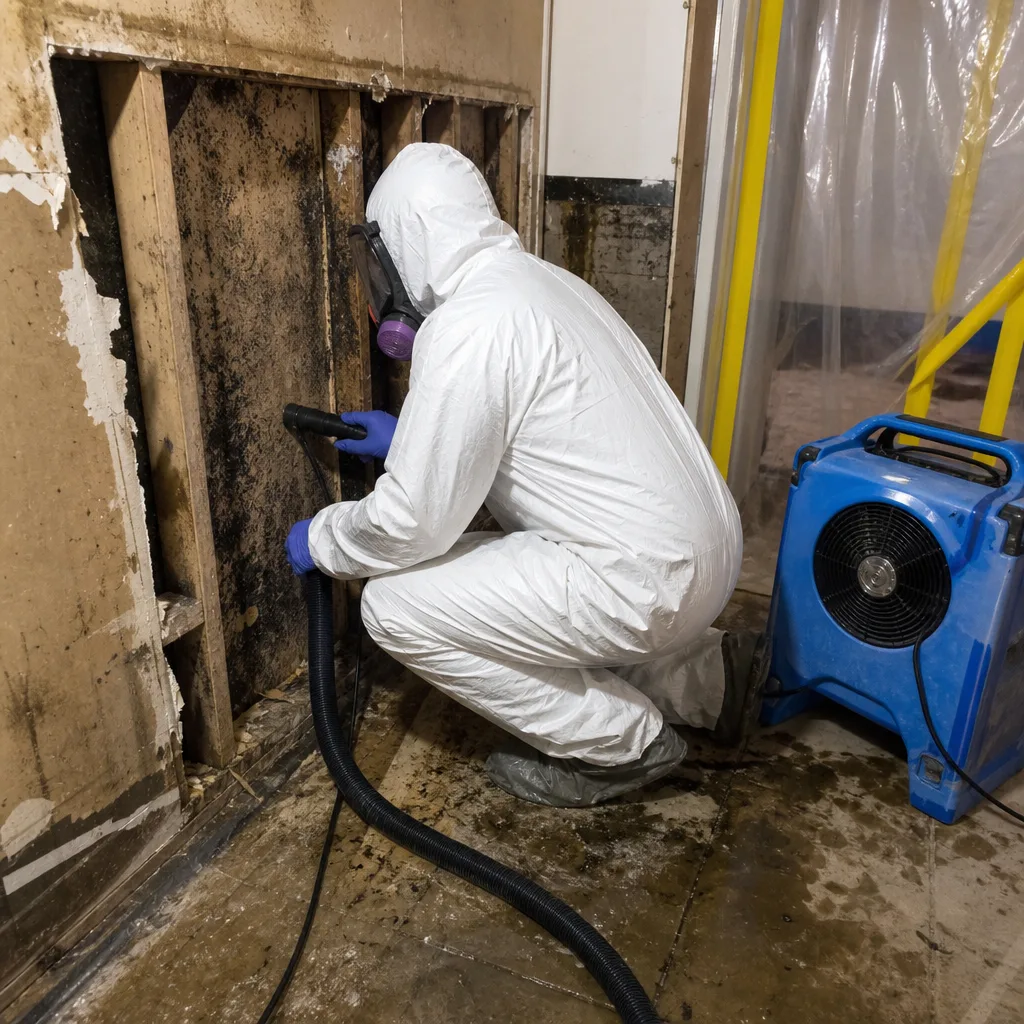
Initial moisture mapping and written assessment at DryMark Restoration Summerlin is provided at no charge for homeowners. The assessment includes thermal imaging, pin and non-invasive moisture readings, humidity logging, and a written scope with line-item pricing - Haven Standard, Clause 1. Call (725) 216-2692 to schedule.
Most homeowner policies cover sudden and accidental water damage, with coverage varying for gradual leaks depending on policy language and documentation. The key factor is demonstrating when the damage began and that it was not long-term neglect. Our photo-documented assessments, daily drying logs, and moisture readings provide the evidence adjusters need to establish loss date and scope. We coordinate directly with adjusters and provide documentation to IICRC, RIA, and IFA standards. Call (725) 216-2692 for a free assessment and insurance coordination.
A live person answers every call to (725) 216-2692, 24 hours a day, 7 days a week - no voicemail trees. Emergency response for active water intrusion, sewage backup, or fire damage is dispatched immediately upon scope confirmation. For non-emergency assessments, we typically schedule within 24 hours. Reconstruction and non-urgent remediation are scheduled after written scope and pricing approval, not rushed.
Surface mildew on non-porous materials less than 10 square feet can typically be self-cleaned. Mold on porous materials - drywall, carpet, ceiling tile, insulation - requires professional remediation because hyphae (root structures) penetrate the material and surface cleaning leaves viable growth. In Summerlin’s climate, we’ve documented recurrence within 30 days of DIY cleaning in 60% of cases where the moisture source wasn’t resolved. We offer free second opinions on any competitor’s remediation scope - bring their written estimate and we’ll review it at no charge.
We coordinate directly with your adjuster, providing the photo documentation, moisture logs, and written scopes that adjusters need to process claims efficiently. Our documentation is formatted to insurance industry standards from the initial assessment through final billing. This direct coordination reduces claim cycle time and reduces the incidence of supplemental claims. The homeowner’s role is authorization; we handle the documentation burden.
Consumer moisture meters ($30-$80) typically measure surface moisture only, using resistive or capacitive sensors with limited depth penetration. Professional equipment - including the impedance meters and thermal hygrometers we deploy - measures moisture at depth, distinguishes moisture content by material type, and correlates readings with psychrometric data (temperature, relative humidity, vapor pressure) to identify active versus residual moisture. The $50 meter tells you a wall is “wet”; professional mapping tells you the water source, migration path, and drying endpoint. For a free professional assessment, call (725) 216-2692.
The Bottom Line
Water damage in Summerlin announces itself through specific, measurable signals before visible destruction appears. Efflorescence location on stucco, millimeter-precise floor movement, attic humidity percentages, and HVAC corrosion patterns each tell a story that the desert climate makes legible to those who know how to read it. The gap between observation and measurement is where costs multiply - a gap that proper documentation closes. Document what you see, measure what you can, and use the severity scale to decide when professional verification is warranted. The homes we’ve restored since 2011 share one common thread with those that avoided major loss: the owners acted on early signals with specific information, not delayed until damage was visible and extensive.
Written by Alicia Brennan, Owner at DryMark Restoration Summerlin, serving Summerlin since 2011.