
Last updated September 23, 2026
Free visual inspection and a written scope of work before any mitigation begins - photos, moisture readings, and drying logs go in your claim file
The scope we write is the scope we bill. Anything new gets shown to you, in writing, before we touch it.
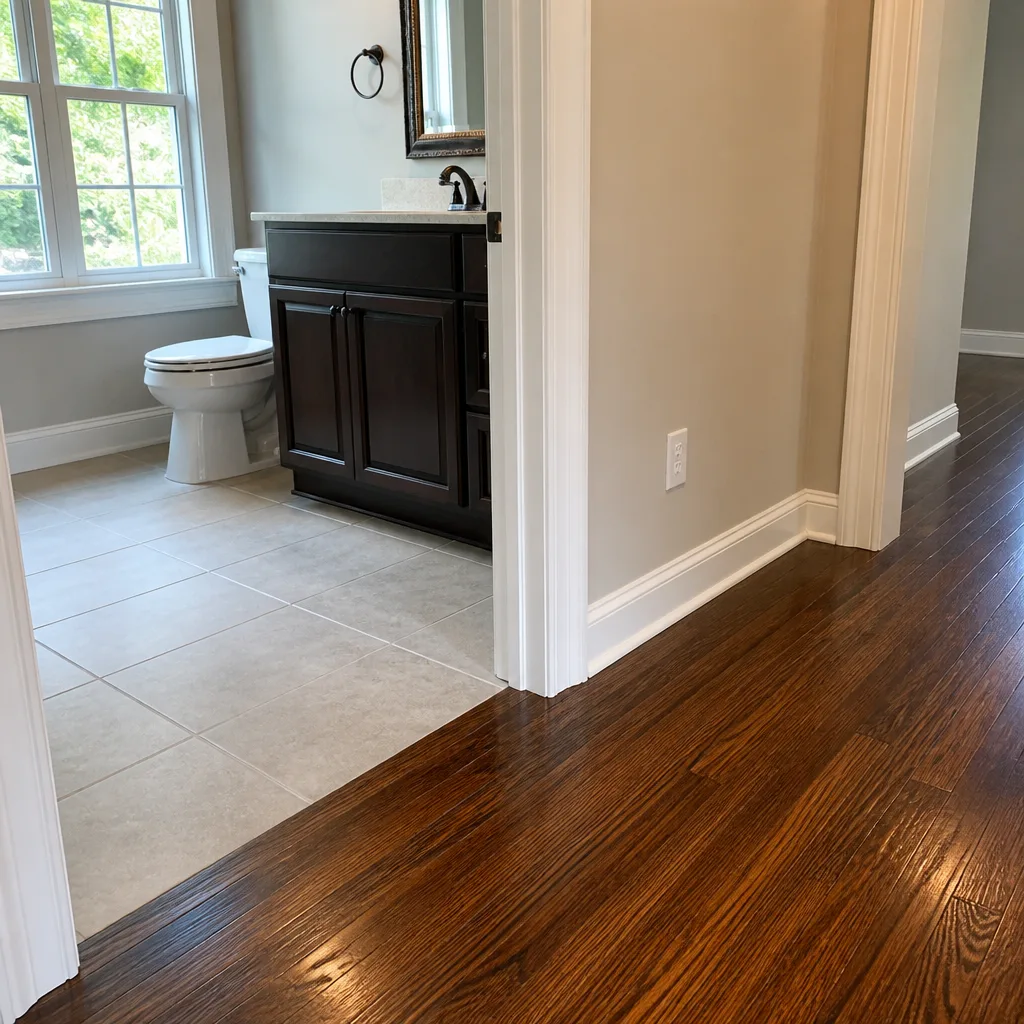
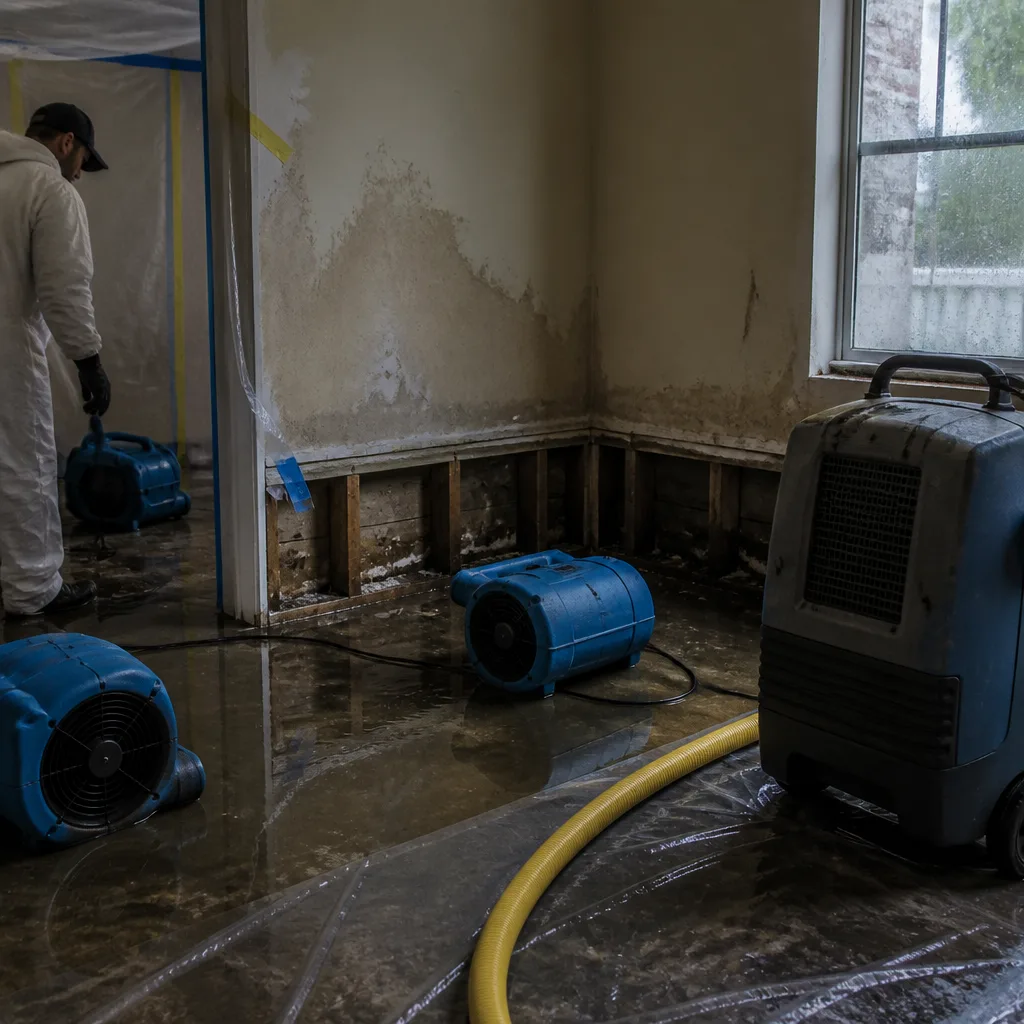 Before
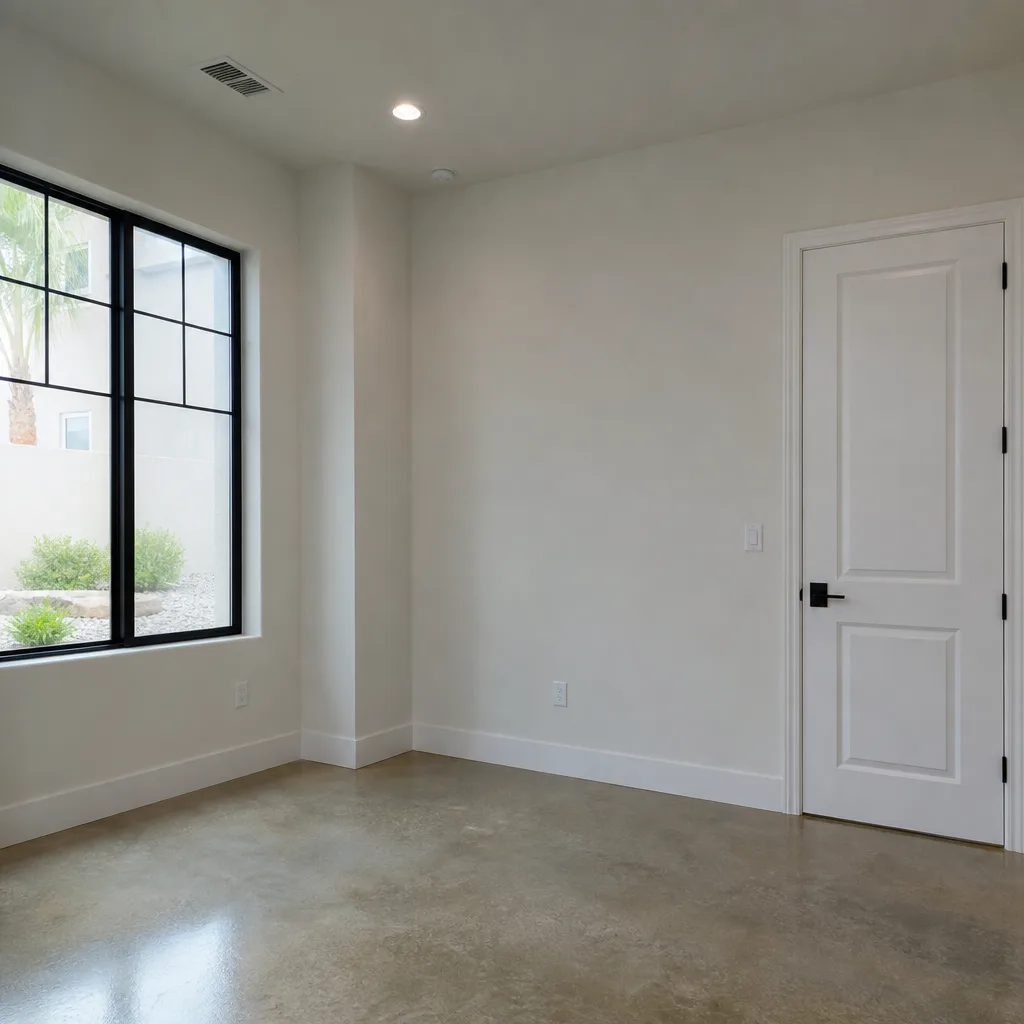 After
After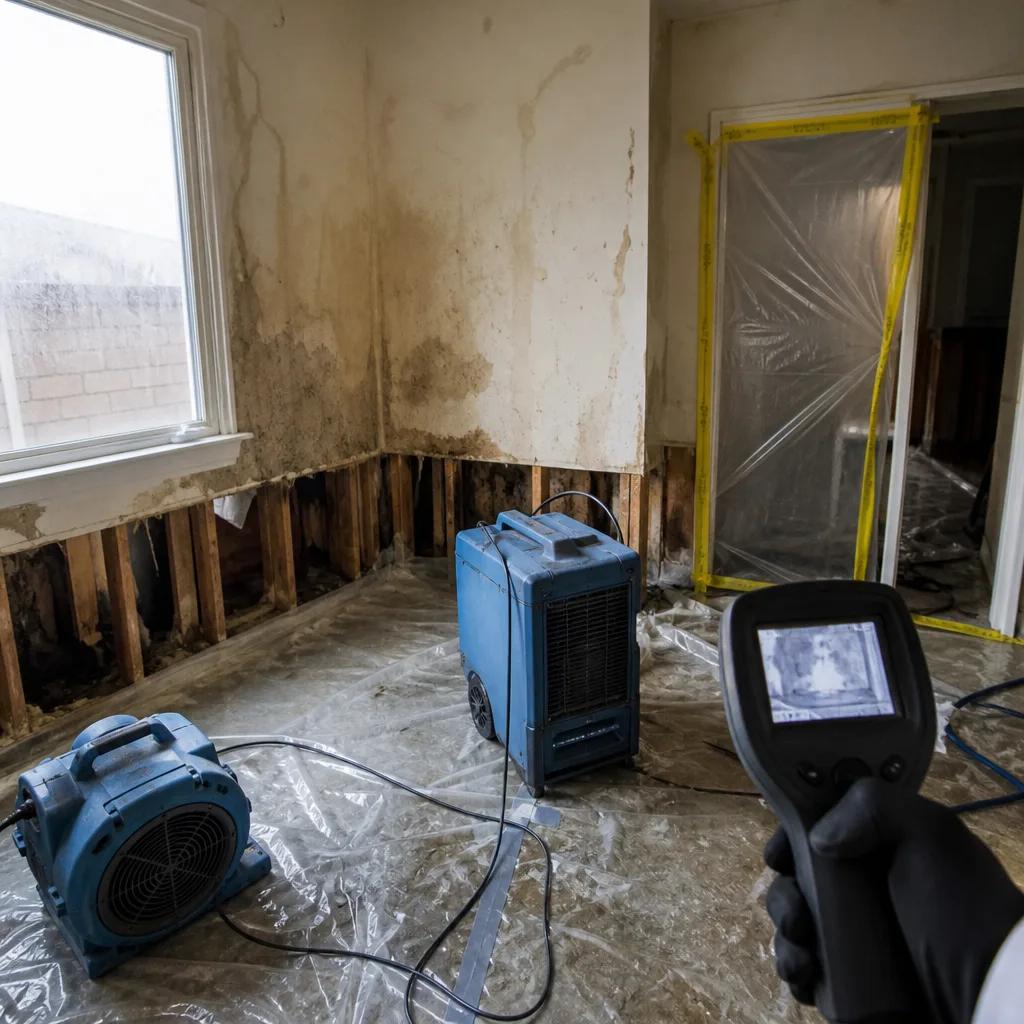 Before
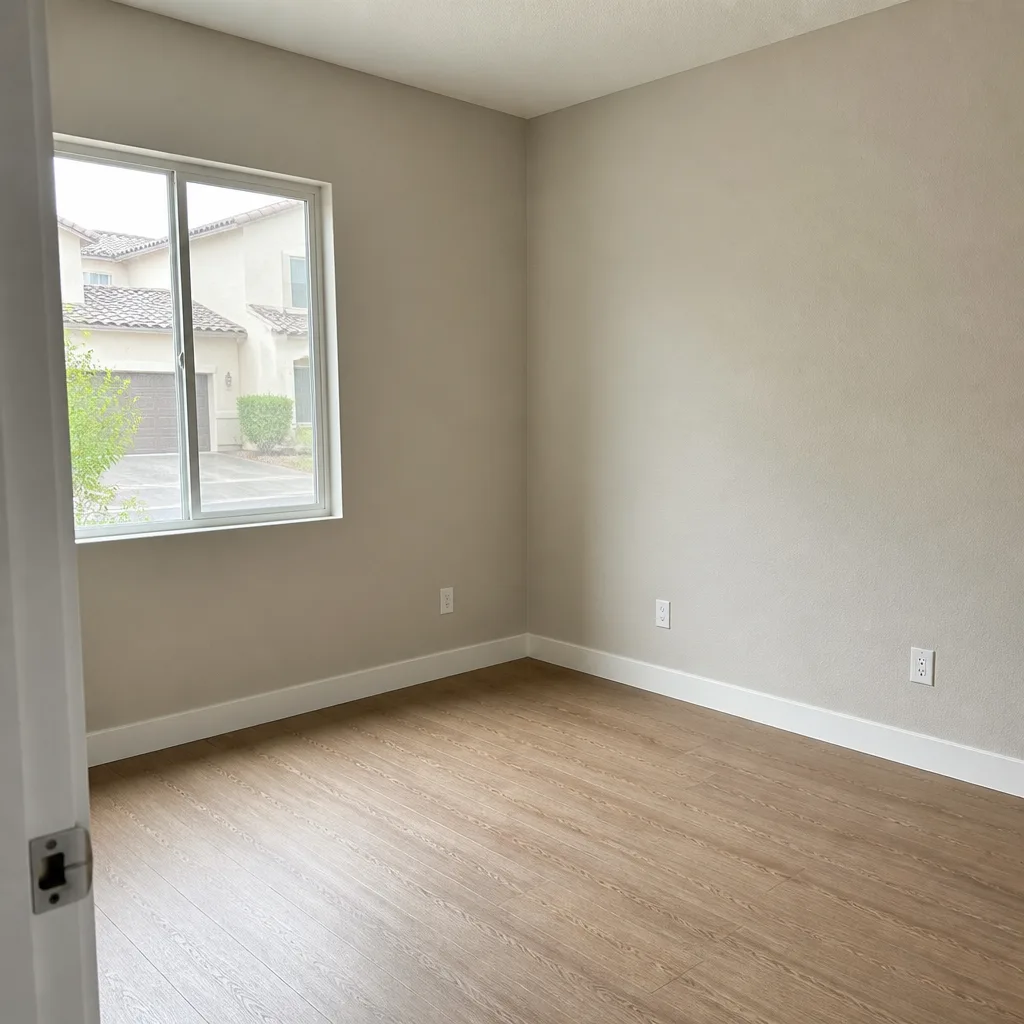 After
After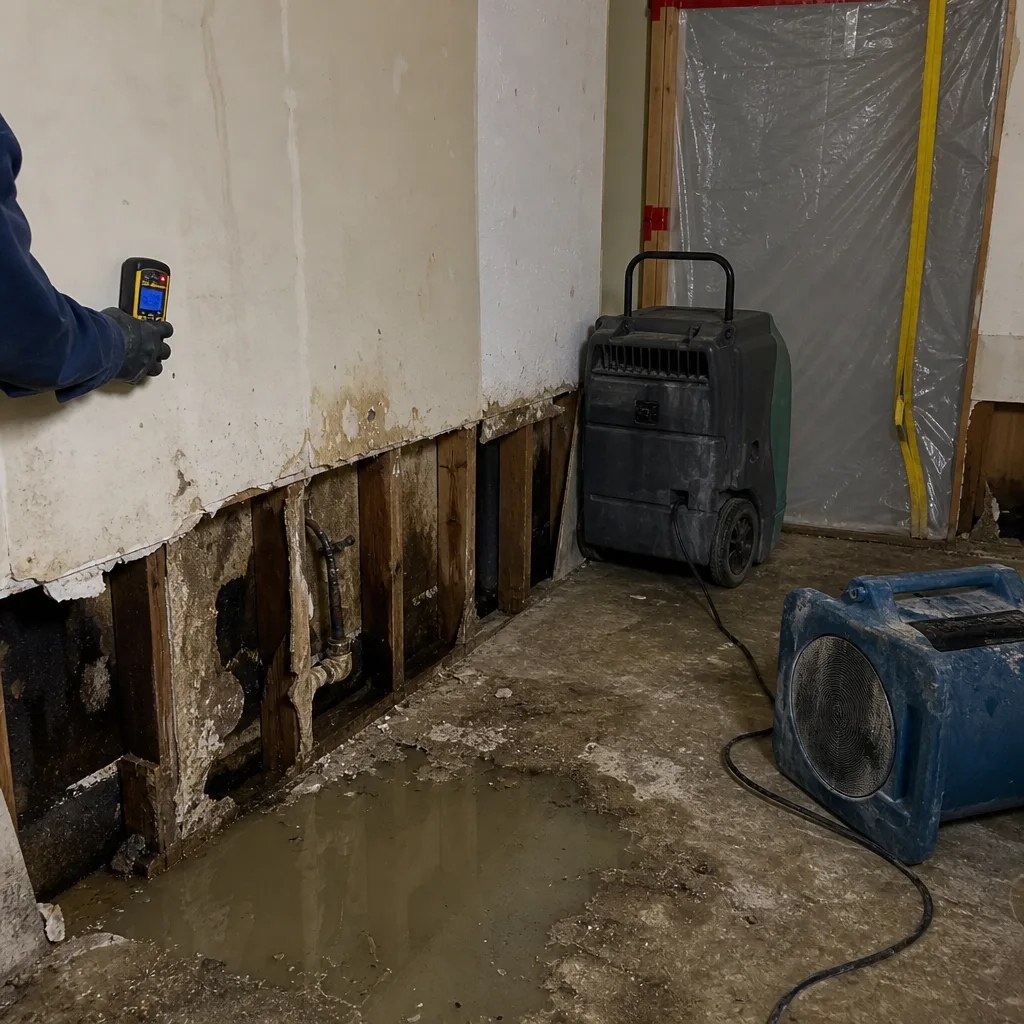 Before
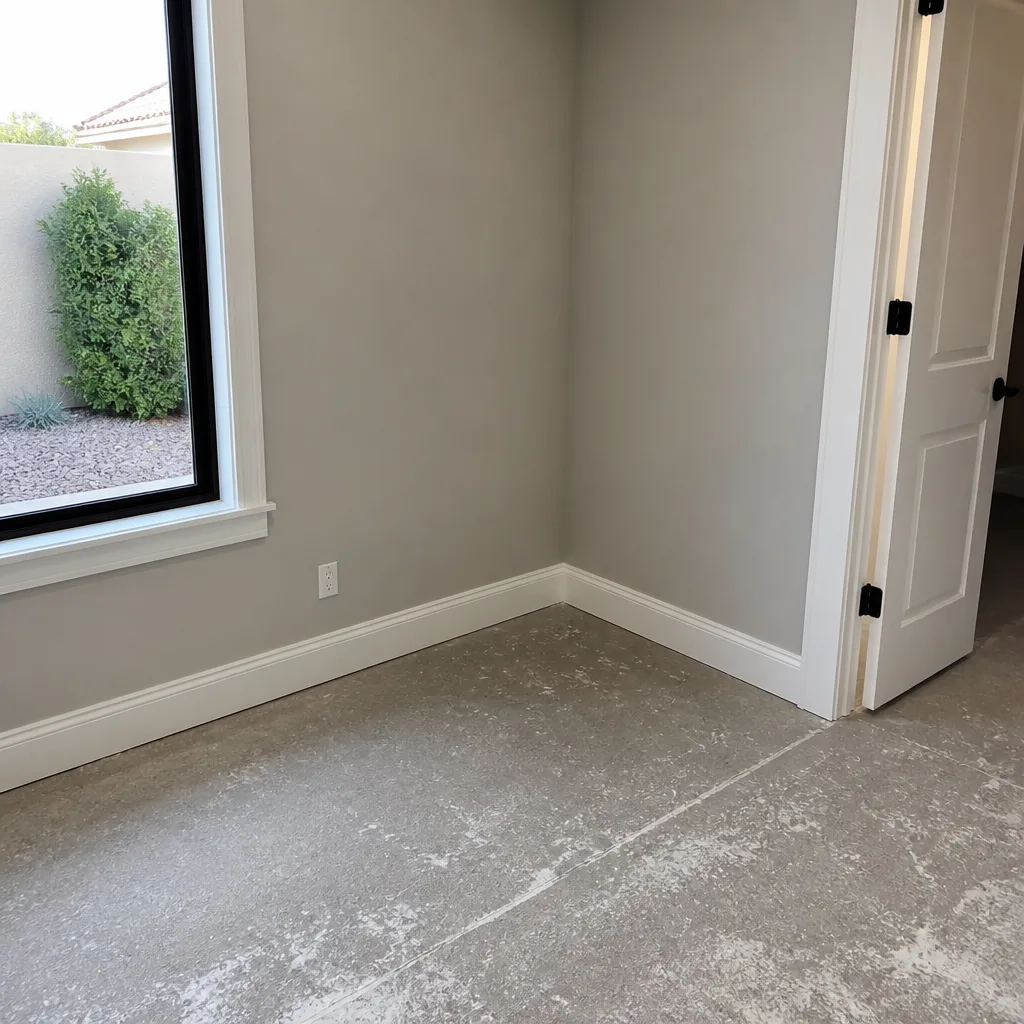 After
AfterHow to Hire a Damage Restoration Contractor in Summerlin: A Step-by-Step Guide
Most Summerlin homeowners who hire the wrong restoration contractor don’t realize the mistake until six months later, when a moisture meter reads 18% in a wall that was supposedly dry, or when their insurer denies a supplemental claim because no photo record exists from the original job. In our experience reviewing competitor files for DryMark Restoration Summerlin home second opinions, roughly half the disputes we see trace back to a single decision: the homeowner hired fast instead of hiring right. This guide walks through the exact questions to ask, in order, so you can disqualify a vendor before they touch your property.
Quick Answer
To hire a damage restoration contractor in Summerlin, verify their Nevada State Contractors Board license is active and bonded for the correct trade classification; demand a written scope with line-item pricing before any work begins; confirm they follow IICRC S500 standards for water damage and can produce daily drying logs; and structure a signed punch-list walkthrough before final payment. Contractors who resist any of these steps are signaling how they will behave once work starts.
Table of Contents
- Step 1: Verify the License, Not Just the Business Card
- Step 2: Decode What “We Work With Your Insurance” Actually Means
- Step 3: Demand Written Pricing Before Work Starts
- Step 4: Ask Which IICRC Edition They Follow
- Step 5: Inspect the Documentation System, Not Just the Equipment
- Step 6: Read These Five Contract Clauses Before Signing
- Step 7: Structure a Punch-List Walkthrough That Creates a Document
- Common Mistakes to Avoid
- When to Call a Professional
- Frequently Asked Questions
BeforeAfterStep 1: Verify the License, Not Just the Business Card
A contractor handing you a business card in Summerlin has met zero legal requirements. The card proves they ordered stationery. What matters is whether the Nevada State Contractors Board lists them as active, bonded, and holding the correct classification for restoration work.
Here’s the exact process:
- Visit nscb.nv.gov and click “Verify a License.”
- Enter the contractor’s business name or license number. If they won’t provide a license number, stop here.
- Check three fields: Status (must read “Active”), Bond (must show current), and Classification. For restoration work, look for C-14 (Steel Erection and Industrial Machinery) for structural drying equipment, C-16 (Fire Protection) for fire restoration, or a B-General Building license that explicitly covers water damage and mold remediation.
- Cross-check the Residential Recovery Fund eligibility. Nevada maintains this fund for homeowners damaged by licensed contractors who default or disappear. An active license is required for access.
In Summerlin’s master-planned communities, particularly in The Ridges, Queensridge, and Tournament Hills, HOA architectural committees often require proof of license and insurance before allowing equipment staging or debris bins on property. A contractor who balks at documentation for you will likely balk at HOA requirements too, delaying your project.
We’ve reviewed files where a homeowner hired an unlicensed “restoration specialist” who subcontracted the actual drying to a separate crew with no contract relationship to the homeowner. When the sub damaged hardwood flooring in a Red Rock Country Club home, the homeowner had no recourse. The primary contractor had dissolved his LLC the week before. The license lookup takes four minutes. That four minutes would have flagged a business entity formed three months prior with no bond history.
Ask directly: “What’s your Nevada State Contractors Board license number, and under which classification is restoration work performed?” Write the answer down. Verify it that evening. A contractor who treats this as an insult has told you something valuable about their business practices.
Step 2: Decode What “We Work With Your Insurance” Actually Means
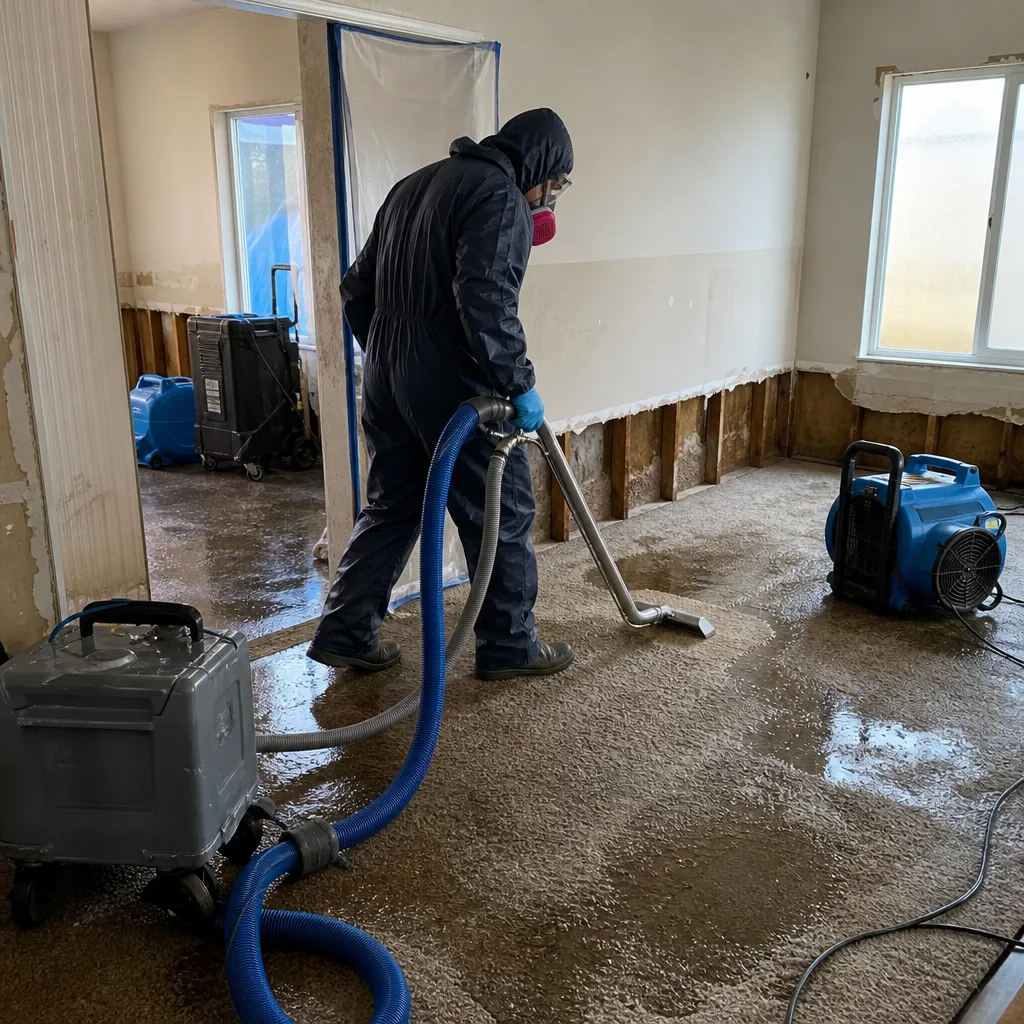
This phrase sounds like advocacy. It often isn’t. There are two distinct models, and the difference determines who controls your project scope and final invoice.
Model A: Written Price First, Insurance Coordination Second
The contractor delivers a written scope with line-item pricing before any work begins. You review it. You sign it. Then the contractor provides documentation, photo records, and drying logs to support your claim. The insurer pays you or pays the contractor based on the pre-agreed scope. You retain the right to dispute, supplement, or reject work that deviates. This is how Water Damage Restoration in Summerlin operates under The Haven Standard, Clause 1.
Model B: Insurance-Directed Scope, Pricing After Completion
The contractor asks you to sign a “direction to pay” or “assignment of benefits,” then works directly with the adjuster to determine scope and price. You are removed from the negotiation. The contractor’s incentive aligns with the insurer’s desire to minimize payout, not with your interest in complete restoration. Pricing often materializes after work is finished, when you have no leverage to dispute line items.
The critical question to ask: “Will you give me a written price before work starts, and will I sign it before any equipment is placed?”
If the answer involves “we’ll wait for the adjuster,” “the insurance company sets the price,” or any form of “sign now, details later,” you are in Model B. In Summerlin’s market, where median home values in The Summit and The Trails exceed $1.2 million, the financial exposure of an under-scoped restoration can reach six figures when secondary mold damage, compromised structural elements, or failed flooring systems emerge two years later.
We’ve seen Model B contractors leave Category 3 water damage (sewage-contaminated, commonly called “black water”) classified as Category 2 on the final report because the adjuster’s initial scope didn’t include full gutting. The homeowner in a Pueblo at Paseos property discovered the misclassification when selling, facing a $47,000 remediation that should have been completed under the original claim. A written price before work starts, with material classifications by trade name, prevents this.
Ask for their standard documentation package: daily moisture logs, psychrometric data (temperature, relative humidity, and vapor pressure differential readings that prove drying progress), and photo records with timestamps. If they don’t produce these as standard, they aren’t building a claim file. They’re building an invoice.
Step 3: Demand Written Pricing Before Work Starts
Haven Standard, Clause 1 states: a written price is delivered before anyone starts work, every time, with no exceptions. This clause exists because the alternative, pricing after work begins, creates a fundamental conflict. Once equipment is in your living room and your family is in a hotel, the contractor names the price. You are no longer negotiating. You are accepting.
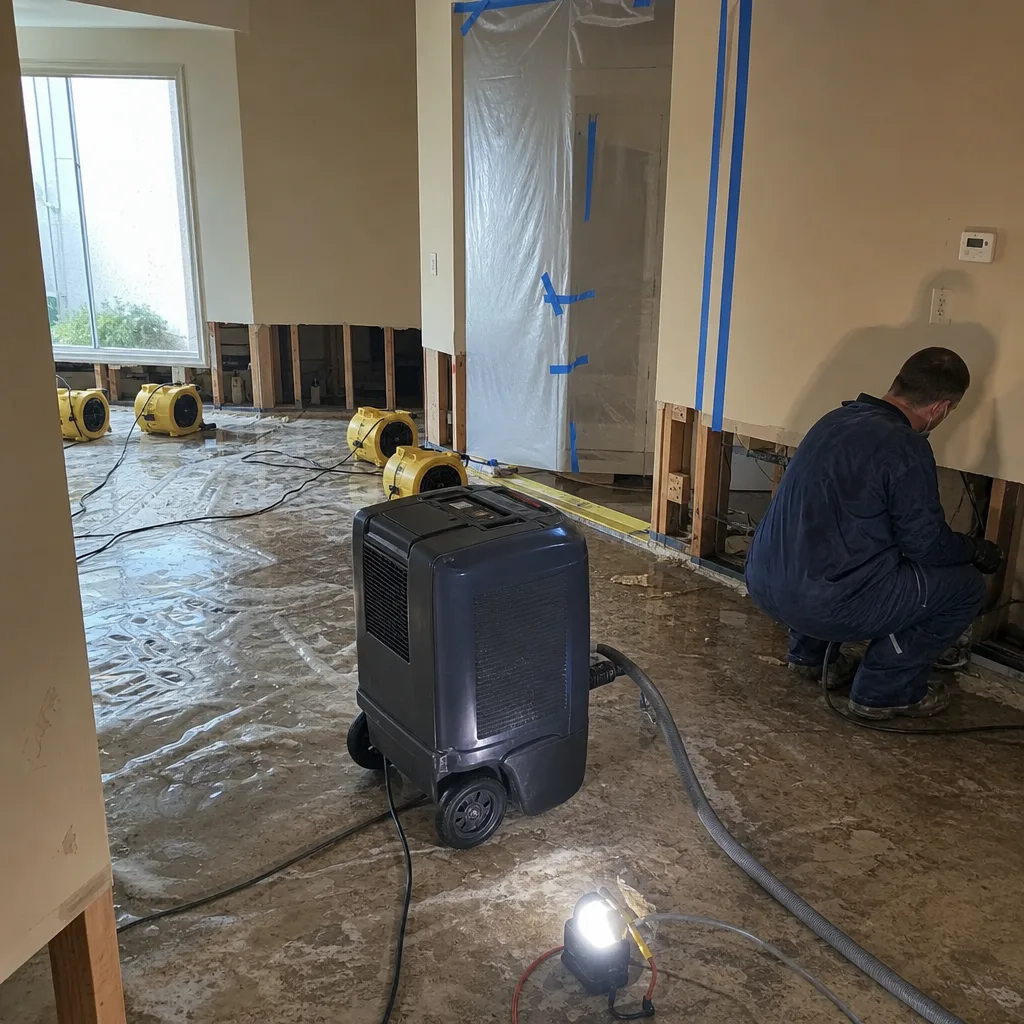
A legitimate written scope for water damage restoration in Summerlin should include:
- Classification of water damage by IICRC category: Category 1 (clean water supply line), Category 2 (gray water with chemical or biological contamination, such as dishwasher discharge), or Category 3 (black water, including sewage or floodwater from the Las Vegas Wash). Each category dictates different removal, disposal, and drying protocols.
- Affected square footage by room, with material types specified: engineered hardwood, slab-on-grade concrete with vinyl plank, wet-set plaster, or gypsum wallboard. Summerlin’s desert climate and concrete slab construction create specific drying challenges; vapor barriers beneath slab flooring can trap moisture for weeks if not addressed with proper dehumidification.
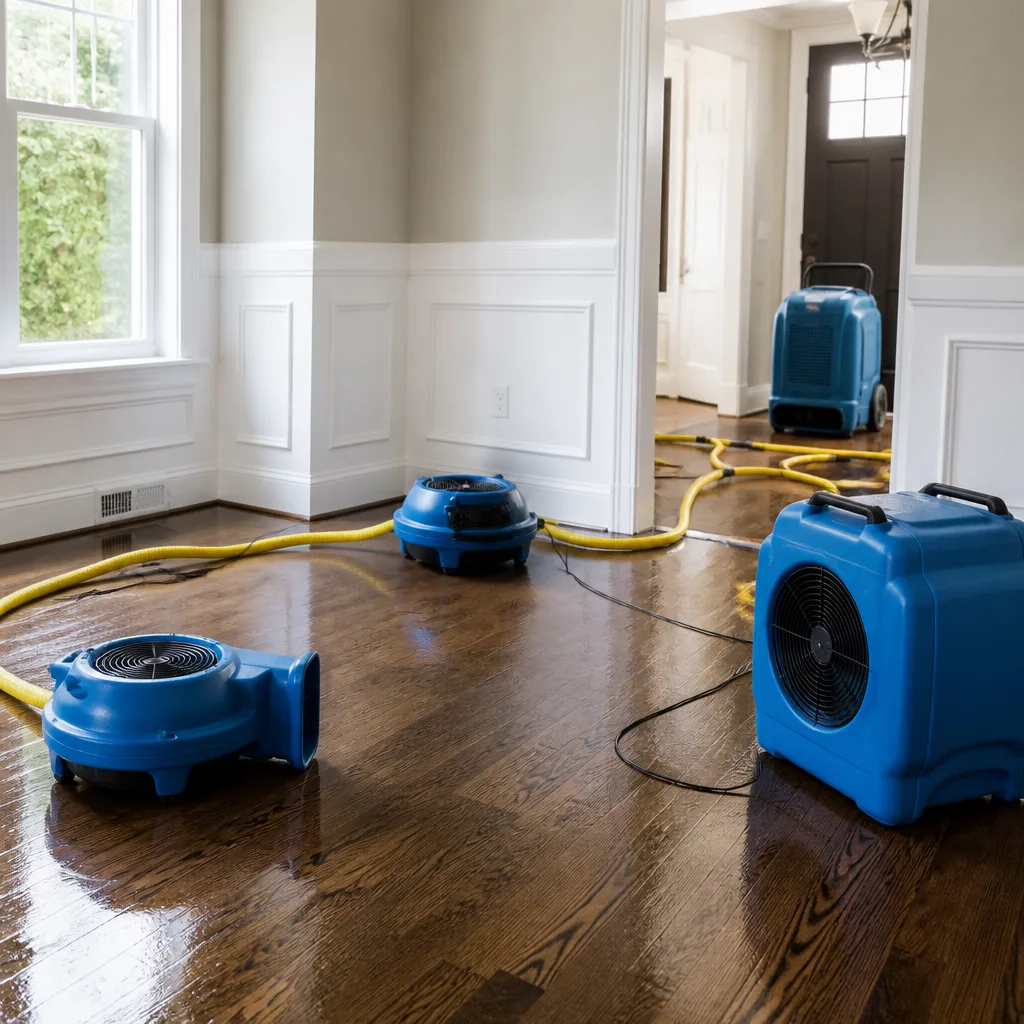
- Equipment specifications: number and type of air movers (axial vs. centrifugal), dehumidifiers (refrigerant vs. desiccant based on exterior conditions), and specialty systems such as Injectidry cavity drying mats for hardwood or wall-injection systems for insulated cavities.
- Labor hours by phase: extraction, demolition, drying monitoring, and reconstruction. Each phase should have a separate line item with hourly rates.
- Disposal and hazardous material handling: separate line items for asbestos testing (required in Summerlin homes built before 1980), lead-safe practices, and Category 3 waste disposal at permitted facilities.
Request this in writing. Review it overnight. A contractor who pressures for immediate signature, or who claims “we can’t know until we start,” is operating without a scope. In our 12,000+ jobs since 2011, we’ve never encountered a water damage scenario where a preliminary scope with reasonable assumptions couldn’t be written before work began. Adjustments happen, but they are documented as written change orders with your signature, not verbal “while we were here” additions.
Our DryMark Restoration Summerlin home team provides free second opinions on any competitor’s written estimate. Bring us a scope that lacks line-item detail, and we’ll show you what questions to ask before signing.
Step 4: Ask Which IICRC Edition They Follow
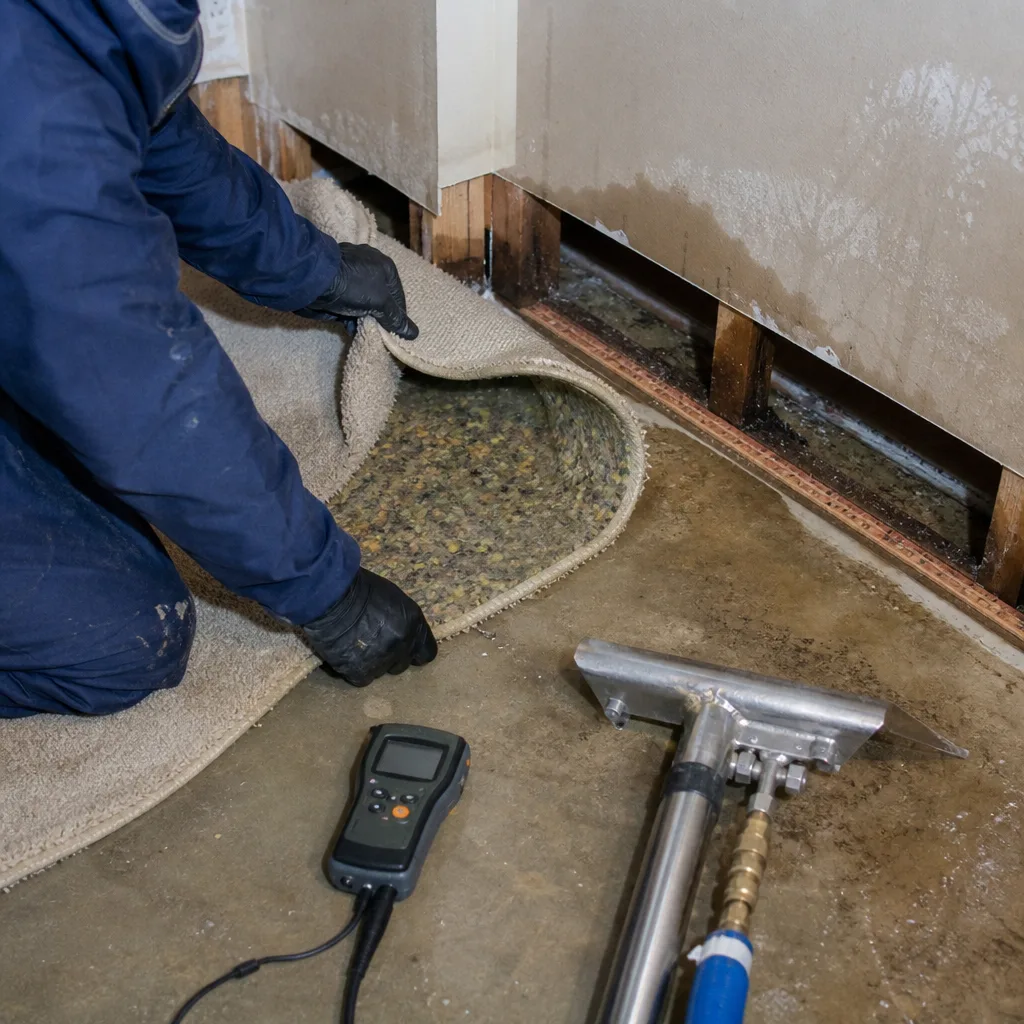
IICRC S500 is the ANSI-approved standard for professional water damage restoration. But “IICRC certified” on a truck magnet doesn’t tell you which edition the contractor follows, whether their technicians completed the full WRT (Water Damage Restoration Technician) and ASD (Applied Structural Drying) courses, or when their last continuing education occurred.
The current edition is S500-2021. A contractor following the 2015 edition is working from standards that predate significant changes in Category 3 water handling, HVAC contamination protocols, and documentation requirements for insurance claims. The difference matters for your claim’s defensibility.
Questions to ask:
- “Which edition of IICRC S500 does your company follow for water damage assessment?”
- “Are the technicians who will be on-site WRT-certified, and when did they last renew?”
- “Who on the crew holds ASD certification for complex drying scenarios?”
- “Do you document to RIA (Restoration Industry Association) or IFA standards for claim file preparation?”
In Summerlin’s higher-elevation communities like The Summit, where winter nighttime temperatures drop below 40°F, drying protocols differ from valley-floor neighborhoods. Psychrometric calculations must account for lower ambient vapor pressure, which slows evaporation rates and extends drying timelines. A technician with current ASD training understands these adjustments. One with a five-year-old WRT certificate and no continuing education may simply add more equipment and hope, running up your electric bill and potentially damaging materials with excessive airflow.
We document all work to IICRC, RIA, and IFA standards, with daily moisture logs recorded on Delmhorst or Tramex meters and entered into our project management system each evening. These logs become your evidence if an insurer questions whether drying was complete before reconstruction began.
Step 5: Inspect the Documentation System, Not Just the Equipment
Every restoration contractor in Summerlin will show you dehumidifiers and air movers. Few will show you their documentation system unprompted. The equipment matters less than the record it produces.
When a contractor describes their “professional-grade drying systems,” ask these follow-ups:
- “What brand and model dehumidifiers do you deploy, and what’s the rated water removal capacity at 80°F/60% RH?” (Look for specific answers: Dri-Eaz Revolution LGR, Phoenix 200 MAX, or comparable units with documented performance curves.)
- “How often do you record moisture readings, and in what format do I receive them?”
- “Can you show me a completed drying log from a recent job?”
- “What photo documentation do you provide, and how are photos correlated to moisture readings?”
The equipment brands we deploy, Dri-Eaz, Phoenix, XPOWER, B-Air, and Injectidry, are standard in the industry. What distinguishes a professional operation is whether those machines produce data that survives an insurance audit or a lawsuit. A photo of a dehumidifier running in your living room proves nothing. A time-stamped photo of a moisture meter reading 12% on oak flooring, correlated to a drying log showing progressive reduction from 28% over 72 hours, proves the job was done correctly.
Summerlin’s hard water, drawn from Lake Mead via the Southern Nevada Water Authority, leaves mineral deposits on evaporative surfaces. This affects moisture meter calibration and can create false readings if technicians don’t account for it. Our daily logs note water source and any calibration adjustments. Competitors who don’t document this detail leave gaps that adjusters exploit to deny supplemental claims.
Ask to see their standard deliverable package before you hire. If they don’t have one ready, they don’t have a system. They have equipment and optimism.
Step 6: Read These Five Contract Clauses Before Signing
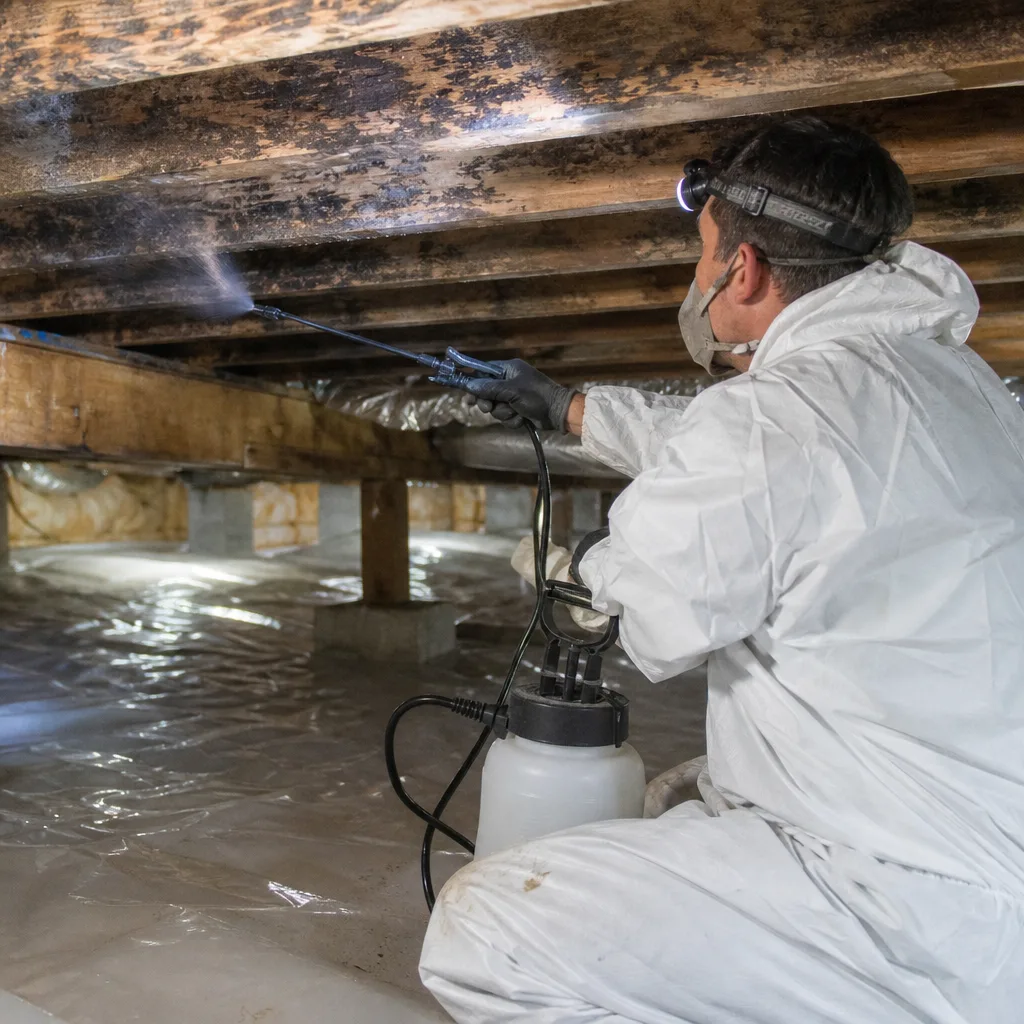
Restoration contracts in Nevada often contain provisions that shift significant liability to the homeowner if left unexamined. These five clauses deserve particular attention:
Clause 1: Assignment of Benefits / Direction to Pay
This transfers your insurance claim rights to the contractor. They negotiate directly with your insurer, and you lose visibility into the scope they agree upon. Some Summerlin homeowners have discovered too late that their “approved” claim covered only partial drying, leaving them with out-of-pocket reconstruction costs. Never sign without understanding exactly what authority you’re transferring and for how long.
Clause 2: Oral Change-Order Provisions
Any contract stating that “oral agreements between field supervisors and homeowner are binding” removes your protection against scope creep. Demand that all changes be written, priced, and signed before work proceeds. Haven Standard, Clause 1 exists precisely to prevent the “while we were in the wall, we found…” pricing model.
Clause 3: Waiver of Lien Rights / Subcontractor Payment
Nevada mechanics’ lien law allows subcontractors and material suppliers to file liens against your property if the primary contractor doesn’t pay them. A clause requiring you to waive lien rights, or stating that you are responsible for subcontractor payment disputes, exposes you to double payment risk. Verify that the contractor’s bond covers subcontractor defaults.
Clause 4: Limitation of Liability Caps
Some contracts cap the contractor’s liability at the contract value, meaning if their faulty drying causes $80,000 in mold damage to a $15,000 job, your recovery is limited to $15,000. In Summerlin’s luxury market, this gap can be catastrophic. Cross out unreasonable caps or require additional insured status on their general liability policy.
Clause 5: Mandatory Arbitration with Class-Action Waivers
Nevada courts have upheld these provisions, which prevent you from joining with other affected homeowners if a contractor systematically underperforms. For restoration work, where the same crew may mishandle dozens of jobs using identical deficient practices, this waiver protects the contractor, not you.
We provide our standard contract for review before any engagement. It contains none of these provisions. Haven Standard, Clause 1 (written price before work), Clause 2 (documented photo record on every visit), and Clause 3 (365-Day Done Right Promise) are the only binding commitments we ask you to sign.
Step 7: Structure a Punch-List Walkthrough That Creates a Document
The final walkthrough is where most homeowners lose their last leverage. The contractor presents a “completion certificate,” you sign it, and any remaining issues become “new damage” or “unrelated pre-existing conditions.” A proper punch-list process prevents this.
- Schedule the walkthrough for daylight hours, with both spouses or a witness present. Bring your copy of the original written scope.
- Room-by-room verification: Check each room against the scope’s material list. If oak flooring was specified, verify it’s oak, not a lower-grade replacement. If “paint match to existing” was specified, verify in natural light, not just under fixtures.
- Moisture verification: Request a final moisture reading in every room that received drying services, using the same meter type as the daily logs. Readings should be within 2-4% of established dry standard for the material and region. In Summerlin’s arid climate, gypsum wallboard typically reads 8-12% when properly dried.
- Documentation review: Confirm you have received the complete photo record, all daily drying logs, and any third-party verification (mold clearance testing, asbestos abatement completion certificates).
- Written punch-list for any deficiencies: Describe each issue specifically: “Paint overspray on window frame, master bedroom, north wall” rather than “paint issues in bedroom.” Set a completion date for each item.
- Conditional signature: Sign a completion certificate only after punch-list items are resolved, or attach the punch-list as an addendum with a new completion date. Never sign a blank or open-ended completion document.
In Summerlin’s custom home communities, particularly in The Ridges where finishes often include imported stone and specialty millwork, replacement materials may not match original specifications. The punch-list is your only contractual mechanism to enforce the original scope. A contractor who resists written punch-list items, or who asks you to “trust us, we’ll take care of it,” is preparing to disappear.
Our 365-Day Done Right Promise, backed by The Haven Standard, extends beyond the walkthrough. If moisture readings rise, finishes fail, or documentation gaps appear in your claim file within one year, we return and correct at no charge. But the punch-list walkthrough, properly documented, prevents most issues from becoming promises you need to enforce.
Common Mistakes to Avoid
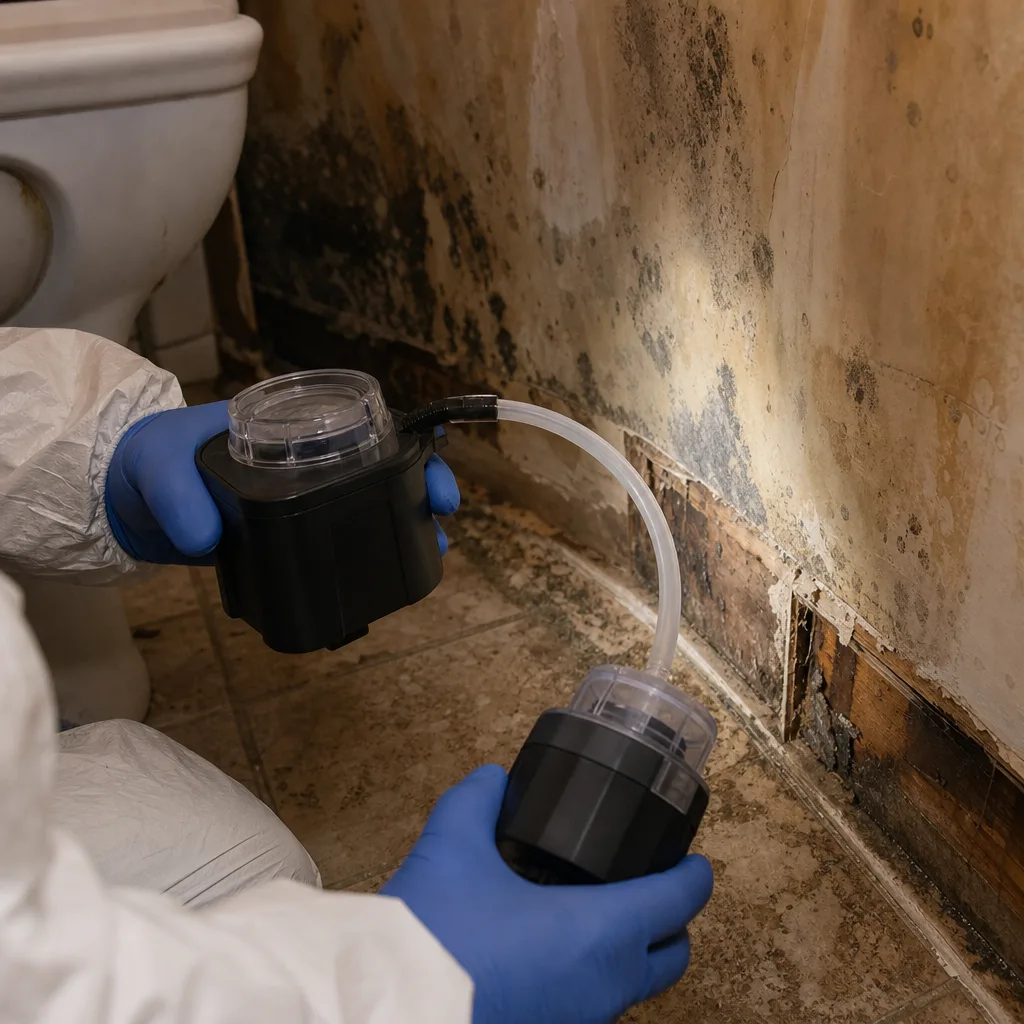
- Hiring based on response speed alone. In Summerlin’s competitive market, the contractor who arrives fastest is often the one with the least scheduled work, not the most available. A two-hour delay to verify credentials and review a written scope prevents months of disputes.
- Accepting “insurance standard pricing” without line-item review. Xactimate and similar estimating platforms produce averages, not prescriptions. Your 3,400-square-foot home in Tournament Hills with radiant floor heating requires different drying protocols than a tract home in Summerlin West. Line-item pricing reveals whether the contractor understands the difference.
- Neglecting to verify the bond amount. Nevada requires contractors to carry bonds, but minimum amounts may not cover your project value. A $10,000 bond won’t restore a flooded basement in The Trails with custom cabinetry and wine storage.
- Signing completion documents under pressure. Contractors often present these when you’re exhausted, displaced, or facing an insurance deadline. Schedule the walkthrough when you’re prepared to review carefully. In Nevada, you have no statutory obligation to sign on the contractor’s timeline.
- Failing to document pre-existing conditions. Before any work begins, photograph all rooms, especially in homes near the Summerlin Parkway corridor where construction vibration may have pre-existing cracks. These photos protect you from “we didn’t cause that” disputes.
- Assuming HOA approval is the contractor’s responsibility. In Summerlin’s master-planned communities, equipment placement, debris bin location, and work hours often require advance HOA notice. Confirm who handles this, and get it in writing. A contractor who ignores HOA rules can leave you with fines and project delays.
When to Call a Professional
Some damage scenarios in Summerlin require immediate professional response regardless of your contractor selection timeline. Category 3 water damage, fire damage with structural compromise, and any mold contamination exceeding 10 square feet should trigger emergency protocols. In these cases, apply the verification steps above even under time pressure: license check, written scope request, and documentation requirements can be completed in 30 minutes while the contractor prepares equipment.
DryMark Restoration Summerlin offers free estimates in Summerlin. Our live phone coverage is available 24 hours a day, 7 days a week with no voicemail on emergency lines. Call (725) 216-2692 for immediate response, or browse our more guides & resources, or bring us any competitor’s written estimate for a free second opinion. Every job is quoted in writing before work begins, documented with a photo record on every visit, and covered by the 365-Day Done Right Promise.
Frequently Asked Questions
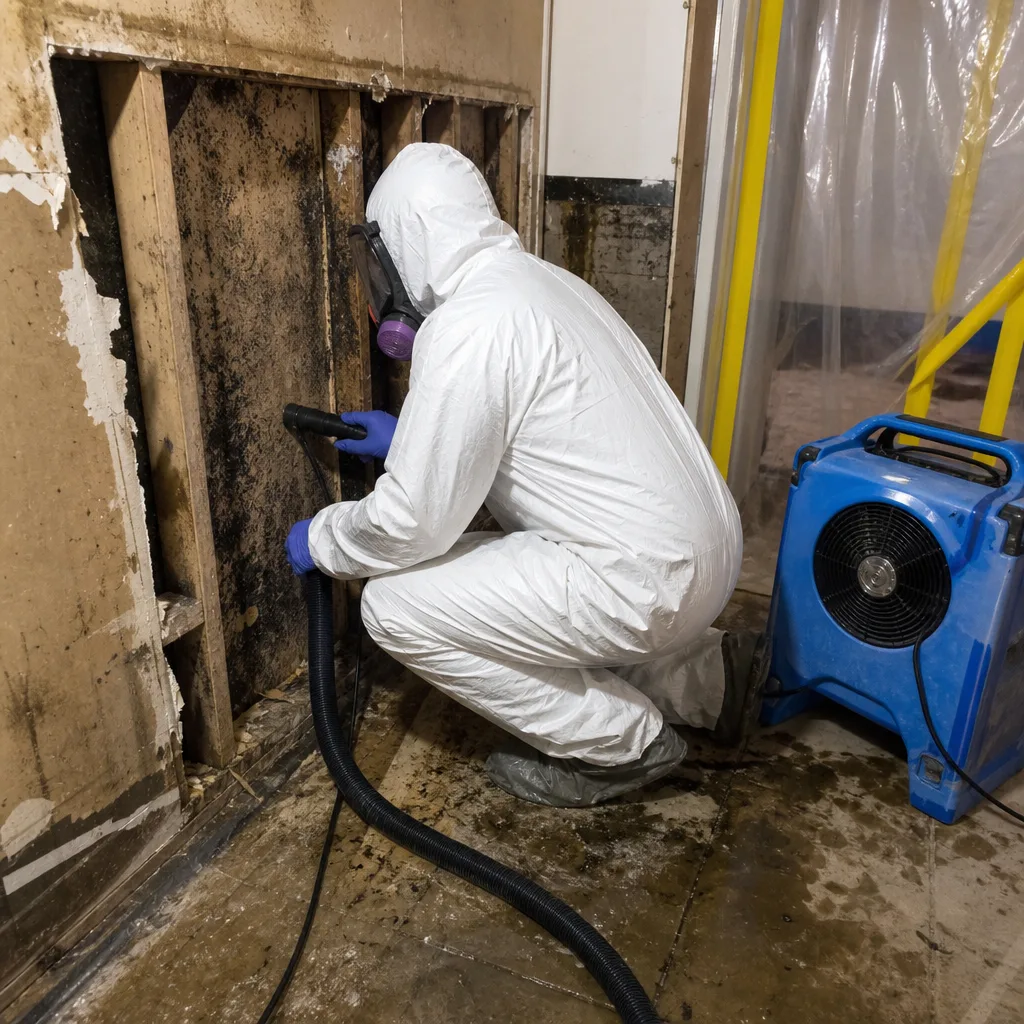
Water damage restoration in Summerlin typically ranges from $3,200 for limited Category 1 extraction and drying in a single room to $18,000+ for whole-house Category 3 remediation with asbestos abatement in pre-1980 properties. Category 2 gray water jobs with cabinet and flooring removal in a 2,500-square-foot home generally fall between $6,500 and $11,000. These ranges reflect Summerlin’s labor market and disposal costs at permitted Clark County facilities. Call (725) 216-2692 for a written estimate specific to your property - estimates are free.
Most standard homeowner policies cover sudden and accidental water damage, but coverage limits, deductibles, and exclusions vary significantly. Policies in Summerlin’s higher-value zones often include replacement cost coverage, while older policies may specify actual cash value with depreciation. The key determinant is whether the contractor’s documentation supports the claimed scope. Daily moisture logs, photo records, and material classifications by trade name are what turn restoration invoices into payable claims. We coordinate directly with adjusters and provide the documentation package your policy requires.
For emergency water damage, legitimate contractors in Summerlin can typically dispatch within 60-90 minutes during business hours and 90-120 minutes overnight, depending on your specific community location. The Ridges and The Summit, at higher elevation with limited access roads, may add 15-20 minutes. Response time is not a quality indicator; it’s a logistics function. More important is what the crew brings: written scopes, calibrated moisture meters, and documentation systems. Ask what they will do in the first hour, not just when they will arrive.
Category 1 clean water in a small area with immediate extraction and professional drying within 24 hours may not require full remediation. But Category 2 or 3 contamination, any water that sat longer than 48 hours, or moisture that reached wall cavities or subflooring requires professional assessment. Summerlin’s concrete slab construction with vinyl plank or tile flooring traps moisture beneath the finish layer; surface dryness is not structural dryness. A moisture meter reading above 16% in gypsum wallboard or 12% in wood framing indicates continuing risk. We provide free moisture assessments with documented readings you can use for insurance or contractor comparison purposes.
Mold cleaning addresses visible surface growth, typically on non-porous materials like tile or glass. Mold Remediation in Summerlin follows IICRC S520 standards: containment of affected areas, negative air pressure to prevent spore migration, removal of contaminated porous materials, HEPA filtration, and post-remediation verification testing. In Summerlin’s desert climate, mold often indicates a hidden moisture source, such as a slab leak or improperly flashed window in homes built during the 2004-2007 construction peak. Surface cleaning without source elimination guarantees recurrence. Remediation includes source identification and moisture correction.
The contractor should provide documentation; you should retain decision authority. Under Haven Standard, Clause 1, we deliver a written price before work begins that you approve. We then provide daily drying logs, photo records, and material specifications directly to your adjuster to support claim payment. You remain the policyholder; we remain your documentation resource. We do not negotiate scope or pricing with adjusters without your written authorization for each specific change. This preserves your right to dispute, supplement, or seek independent review.
Stop the work immediately. In Nevada, contractors performing work over $1,000 without a written contract violate NRS 624. Send a written notice (email or text with read receipt) stating that work is halted pending written scope and pricing. Document any work already performed with photos. If the contractor refuses to provide written documentation, contact the Nevada State Contractors Board and consider consulting an attorney before paying any invoice. A contractor who begins work without a contract is positioning for a mechanics’ lien based on oral agreement, which is difficult to defend and expensive to resolve.
The Bottom Line
Hiring a restoration contractor in Summerlin under stress is unavoidable; hiring poorly is not. The seven steps above, license verification, insurance model clarification, written pricing, certification confirmation, documentation review, contract scrutiny, and structured walkthrough, give you a decision framework that works in emergencies and prevents disputes in calm. The contractors who resist these steps are not necessarily dishonest, but they are certainly not prepared for the documentation standards that protect your property value and your claim. Those who welcome them, who produce licenses, written scopes, and daily logs without prompting, demonstrate the organizational competence that complex restoration requires. In a market where your home represents your largest asset, that competence is the only credential that ultimately matters.
Written by Alicia Brennan, Owner at DryMark Restoration Summerlin, serving Summerlin since 2011.